Dolphia Parker: The Quiet Pillar Behind Bonanza
When The Hollywood Reporter published her obituary on May 23, 2026, many readers encountered Dolphia Lee Parker Blocker for the first time — and yet she had shaped one of television’s most beloved legacies for over fifty years.
She died on April 19, 2026, at the age of 93, in a hospital near Santa Barbara, California. She had lived nearly forty years in that coastal city, writing poetry, hosting holidays, and raising grandchildren — all far outside the reach of fame.
Quick Bio
| Detail | Information |
|---|---|
| Full Name | Dolphia Lee Parker Blocker |
| Born | July 29, 1932, Shattuck, Oklahoma |
| Died | April 19, 2026, Santa Barbara, California |
| Age at Death | 93 |
| Parents | Verner Vilas Parker and Gladys Violet Akers |
| Siblings | Five siblings (Shirley, Janice, Elaine, Marilyn, Deryl, and others) |
| Education | Sul Ross State University, Alpine, Texas |
| Spouse | Dan Blocker (married September 1952 — died May 1972) |
| Children | Danna Lynn (1953), Debra Lee (1953), David (1955), Dirk (1957) |
| Known For | Theater actress; wife of Bonanza star Dan Blocker |
| Residence | Texas, New Mexico, Hollywood, Santa Barbara |
| Nationality | American |
Roots in Oklahoma and the Texas Ranch Country
Dolphia Lee Parker entered the world on July 29, 1932, in Shattuck, Oklahoma — a small town sitting just over the Texas border. Her parents, Verner Vilas Parker and Gladys Violet Akers, raised six children with the rhythms of rural ranch life shaping everything.
The family worked with quarter horses in Texas, and childhood for Dolphia meant open land, physical work, and a household where family was both responsibility and refuge. She later described this upbringing as idyllic. That word matters — she was not sentimentalizing poverty or hardship but genuinely recalling a life grounded in community and purpose.
Her mother Gladys made a significant decision when the older children reached high school age. Wanting broader opportunities for her children, Gladys relocated the family during the school year to Alpine, Texas — a small but educationally active town in the Trans-Pecos region. It was this move that set Dolphia’s entire future in motion.
See also “Dr. Carla Crummie: A Life of Faith, Grief, and Purposeful Reinvention“
Sul Ross, the Stage, and a Man Who Was Hard to Ignore
Dolphia enrolled at Sul Ross State University in Alpine. She was drawn to the performing arts and worked on theatrical productions — not always as the lead, but as a dedicated presence on and behind the stage.
One story, reported across multiple sources and corroborated by the family friend Jack Davis on Medium, captures the texture of her personality well. During a production of Arsenic and Old Lace, a large and boisterous young man began heckling the cast from the auditorium. Dolphia, working as part of the stage crew, walked over and asked him to leave. That young man was Dan Blocker.
It was not a smooth beginning. But something in the encounter stuck. Both were drawn to theater, both came from Texas values, and both possessed a seriousness about life that went deeper than campus socializing. Their friendship ripened into something lasting.
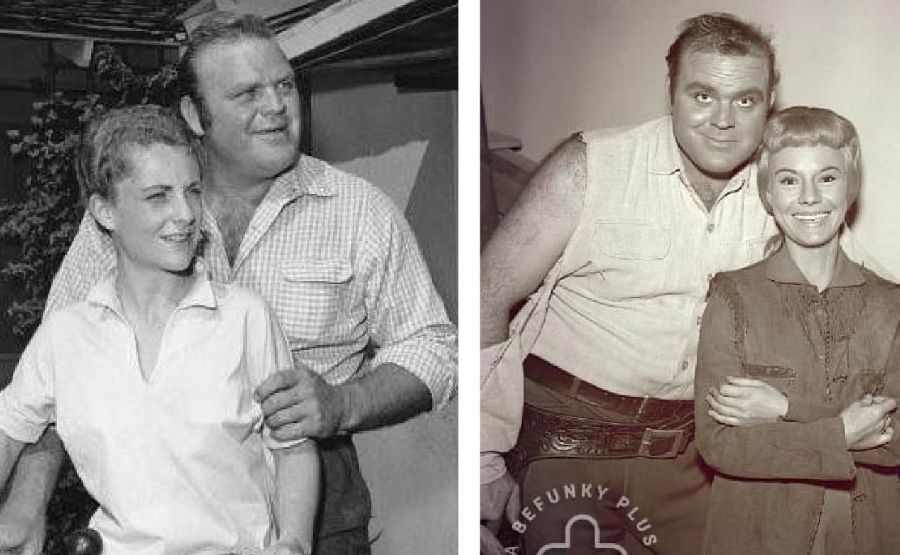
Dan Blocker was already a notable figure on campus — physically enormous at six feet four and over three hundred pounds, but gentle and intellectually restless. He studied speech and drama, excelled academically, and graduated with honors in English. Dolphia was described by those who knew her as calm, warm, and quietly authoritative — the kind of presence people gravitated toward without quite understanding why.
A Marriage Built Before the Fame
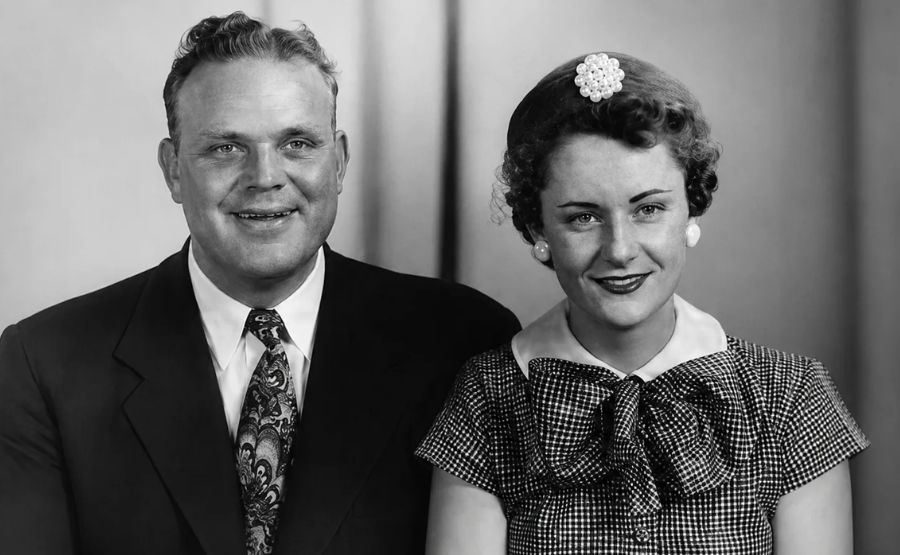
Dan was drafted and served in the U.S. Army during the Korean War, where he fought for 209 days and earned the Purple Heart for wounds received in combat. He returned to the United States in 1952. He and Dolphia married that September — a simple ceremony among family and close friends, in a union the couple had earned through years of shared understanding.
Fame was nowhere near them at that moment. Dan had graduated, taught elementary school in New Mexico, and was trying to figure out his next chapter. Dolphia had married a teacher, not a star. That fact — easily overlooked — is actually essential. Their bond predated celebrity by years, which may explain why it survived celebrity so intact.
Twin daughters Danna Lynn and Debra Lee arrived in 1953. Son David followed in 1955. The family relocated to Hollywood in late 1956 or early 1957 so Dan could pursue a doctorate in theater at UCLA. Their fourth child, Dirk, was born in Los Angeles not long after they arrived.
Life in Hollywood’s Shadow — on Her Own Terms
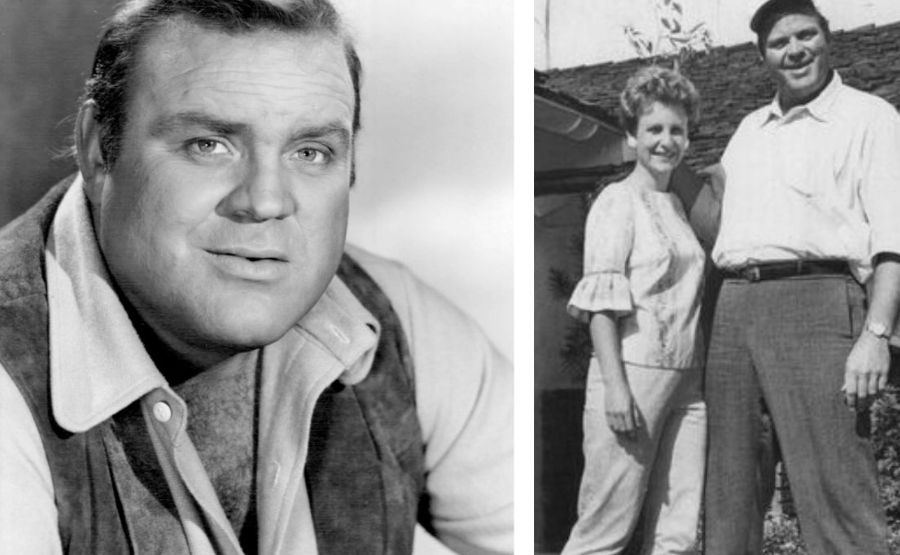
Publicly, Dan Blocker became Hoss Cartwright. In private, Dolphia ran the household, raised the children, and maintained a wall of normalcy that the Bonanza fame was never allowed to breach.
Bonanza debuted on NBC in 1959 and became one of the most watched shows in American television history. Dan appeared in over 400 episodes across 13 seasons. During its peak in the mid-1960s, it was the top-rated show in the country. Dan Blocker became a household face. Dolphia remained, by design, invisible in the public record.
She never gave interviews. She did not appear at premieres or Hollywood events. She did not write a memoir or cultivate a public identity through her husband’s celebrity. According to her family, this was entirely intentional and entirely consistent — she made the same choice at 28 that she made at 60.
What she did pursue was theater, on a smaller and more personal scale. She acted in productions including Fumed Oak and contributed to stage work connected to Arsenic and Old Lace — the same play that had introduced her to Dan. Her arts involvement was real, not decorative.
The family’s stated values extended well beyond domesticity. Dolphia and Dan were vocal about civil rights, peace, and justice. These were not abstract sympathies. Dan publicly criticized the Vietnam War and the use of American tax money to fund military destruction abroad. Their household, according to the family’s own words, was one where these causes were “inextricably part of their culture.” Dolphia was not simply a backdrop to that identity — she was part of its foundation.
The Day the Foundation Cracked
On May 13, 1972, Dan Blocker entered Daniel Freeman Hospital in Inglewood, California for a cholecystectomy — gallbladder removal surgery, considered routine at the time. He developed a pulmonary embolism during recovery, a blood clot that traveled to the lungs. He was forty-three years old. He did not survive it.
The shock was national. Michael Landon, who had worked beside Dan for thirteen years, was devastated. The cast and crew of Bonanza — which had been in production since 1959 — found the loss almost incomprehensible. The show itself ran only one more abbreviated season of fifteen episodes before ending. The writers addressed it directly: Hoss Cartwright died in an unspecified accident, and his family mourned on screen.
But the public mourning and the private grief were two entirely different things.
Dolphia was thirty-nine years old. She had four children, the youngest of whom — Dirk — was just fourteen. She had spent twenty years building a life inside a marriage that began before money, before fame, before any of it. Now she was alone at the center of it.
She did not speak publicly. She did not sell her story. She did not use her grief to claim a platform. She simply — and this is the right word — endured. She held the family together through the teenage years. She managed Dan’s estate, estimated at the time to be worth approximately $1 million (roughly equivalent to $7–8 million in today’s terms). She raised her children without their father.
Raising a Legacy: The Blocker Children
Dolphia did not merely survive her husband’s death. She built something after it.
Her eldest children were twins Danna Lynn and Debra Lee, born in 1953. Both chose private lives, a choice that reflected the values their mother had modeled throughout their childhoods.
Son David, born in 1955, entered the film industry as a producer. His credits span decades: Alan Rudolph’s Trouble in Mind (1985), The Moderns (1988), Michael Apted’s Blink (1994), and Sean Penn’s Into the Wild (2007). In 1998, he won an Emmy Award for producing the HBO film Don King: Only in America. He confirmed his mother’s death to The Hollywood Reporter — her eldest son, doing what the family always did: handling private matters with quiet dignity.
Son Dirk, born July 31, 1957 in Los Angeles, became an actor. When he was six years old, he appeared on TV for the first time alongside his father in a 1964 car commercial. His first regular television role came in Baa Baa Black Sheep (1976–1978). He is best known today as the comically inept Detective Michael Hitchcock on the Fox/NBC series Brooklyn Nine-Nine (2013–2021). Fans of the show have noted the striking physical resemblance Dirk carries to his father — the same warmth, the same slow-burn humor, the same quiet likability. He has been married to Danielle Aubuchon since 1990 and has two children. All four of the Blocker children’s names begin with the letter D — a quiet pattern that, in retrospect, feels very much like something a mother who loved poetry would have noticed.
Santa Barbara: A Life Rebuilt on Her Own Terms
When the children were grown, Dolphia left Hollywood behind. She moved to Santa Barbara — a city she came to love deeply — and she stayed there for the remaining forty years of her life.
She wrote poetry. She traveled. She opened her home to grandchildren for extended stays. She hosted holidays that, by her family’s account, were filled with food, wine, and genuine warmth. She supported causes she believed in. Her children followed her there, most settling in or near Santa Barbara, drawn less by convenience than by the particular presence she carried.
Her family described that presence carefully: “the truly ineffable, numinous presence she emanated and that was felt by all who met her.” That is not a public-relations language. That is people trying to describe something they could not easily explain.
She was predeceased by three siblings: sisters Elaine Caldwell and Marilyn Sullivan, and brother Deryl Parker. She is survived by her children David, Dirk, Debra Lee, and Danna Lynn; sisters Shirley Robinson and Janice Smith; five grandchildren; and eight great-grandchildren.
Her Relationship with Fame — What She Refused to Become
It is worth sitting with something uncomfortable. For more than ten years, Dolphia Parker was wed to one of the most well-known guys on American TV. During that time, she was functionally invisible in the press. Almost every article written about her since has framed her primarily through her husband.
Even this article, in order to explain who she was, has had to spend considerable space on Dan Blocker.
That was her choice. She understood what she was doing. She was not hiding. She was prioritizing. And it is worth asking whether that choice was purely admirable or whether it also cost her a legible identity of her own.
The theater work she did — Fumed Oak, the stage crew work, her genuine participation in the arts — rarely got discussed while Dan was alive. Her activism around civil rights and peace was folded into his biography, not her own. She wrote poetry for decades, apparently with care and quality, and almost none of it is publicly known.
The record does not allow a verdict on whether she found this arrangement deeply fulfilling or quietly frustrating. What it suggests is a woman who made her peace with invisibility and found ways to live fully within it. That is different from saying she had no self to express.
What Her Legacy Actually Is
Dolphia Parker Blocker lived ninety-three years. She outlived her famous husband by fifty-four years. She raised four children, two of whom built meaningful careers in the entertainment industry their father helped define. She spent four decades in Santa Barbara being, by all accounts, a person of real warmth and genuine impact on everyone who encountered her.
She did not accomplish any of this through public visibility. She accomplished it through consistency, presence, and a stubborn commitment to the idea that life is more important than the record of life.
Bonanza is still watched. Dan Blocker is still remembered. And now, finally, Dolphia Parker has her own paragraph in the story — arrived at honestly, not borrowed from anyone else’s fame.
Final Words
Dolphia Lee Parker Blocker was a quiet woman who left a loud legacy. She had the rare discipline to resist fame when it knocked at her door every single day for over a decade. She had the rare strength to hold a family together after a loss that shattered far larger public structures around her.
She wrote poetry no one published. She raised children who went on to make things the world watched. She lived in Santa Barbara for four decades as a person her community knew and remembered, not as an extension of a television character.
She was, as her family said, a remarkable example of tolerance, acceptance, patience, and love.
That is not a small obituary for a life. It is a very good one.
FAQs
1. When and where was Dolphia Parker born?
She was born on July 29, 1932, in Shattuck, Oklahoma — a small town just over the Texas state line. Her family subsequently raised her in rural Texas.
2. When did Dolphia Parker die?
She died on April 19, 2026, from a stroke, in a hospital near Santa Barbara, California. She was 93 years old.
3. How did Dolphia Parker meet Dan Blocker?
Both went to Alpine, Texas’s Sul Ross State University. Their first encounter was notably awkward — she had to remove him from a theater rehearsal for heckling the cast. Their friendship developed from that friction into something far deeper.
4. When did Dolphia Parker and Dan Blocker get married?
They married in September 1952, after Dan returned from service in the Korean War. The ceremony was a private family affair. Dan had earned a Purple Heart during the conflict.
5. How many kids did Dolphia Parker have?
She and Dan had four children: twin daughters Danna Lynn and Debra Lee, born in 1953; son David, born in 1955; and son Dirk, born in 1957 in Los Angeles.
6. Did Dolphia Parker work as an actress?
She participated in theatrical productions, including Fumed Oak and stage work associated with Arsenic and Old Lace. She did not pursue a Hollywood career and preferred to keep her arts involvement personal rather than professional.
7. How did Dan Blocker die?
Dan Blocker died on May 13, 1972, at Daniel Freeman Hospital in Inglewood, California. A pulmonary embolism — a post-surgical blood clot — developed following what was expected to be routine gallbladder surgery. He was forty-three years old.
8. How old was Dolphia Parker when Dan Blocker died?
She was thirty-nine years old, and their youngest child Dirk was just fourteen. She never publicly remarried.
9. What happened to Dolphia Parker after Dan Blocker’s death?
She raised her four children through their teenage years, managed the family estate, and lived privately. After the children were grown, she moved to Santa Barbara, where she spent approximately forty years writing poetry, supporting causes, and hosting her extended family.
10. Who are Dirk Blocker and David Blocker?
Dirk Blocker, born July 31, 1957, is an actor best known as Detective Michael Hitchcock on Brooklyn Nine-Nine (2013–2021). David Blocker, born May 4, 1955, is a film producer whose credits include Into the Wild (2007) and who won an Emmy in 1998 for Don King: Only in America.
11. What were Dolphia Parker’s personal values?
According to her family, the Blocker household was defined by devotion to family, civil rights advocacy, and a commitment to peace and justice. Dolphia was described as a person of exceptional tolerance, warmth, and genuine acceptance toward all people.
12. Where is Dolphia Parker buried?
As of available records, no specific burial location for Dolphia has been made public. Dan Blocker is buried at Woodmen Cemetery in De Kalb, Texas, alongside his parents and sister. His headstone reads B. Dan D. Blocker.
Read, learn, and get inspired with every visit to Brief Magazine.