Why Does Shashank Tripathi Wear Sunglasses? The Full Story Behind the Shades
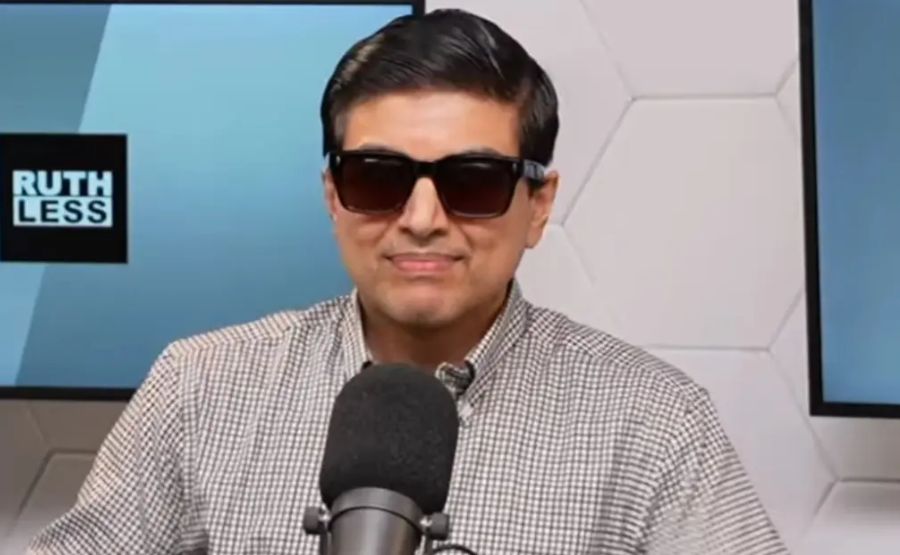
Shashank Tripathi is one of the most recognized — and most debated — faces in conservative new media today, and he achieves this while never showing you his eyes.
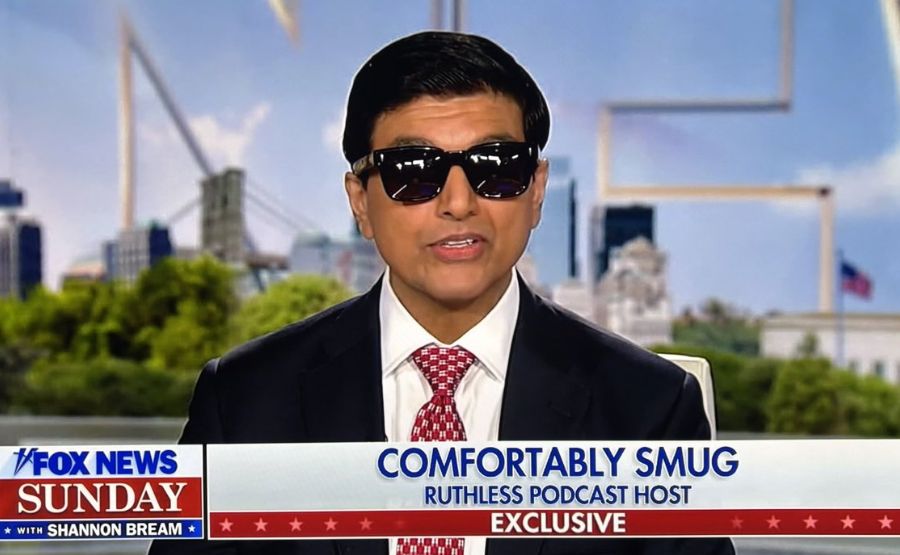
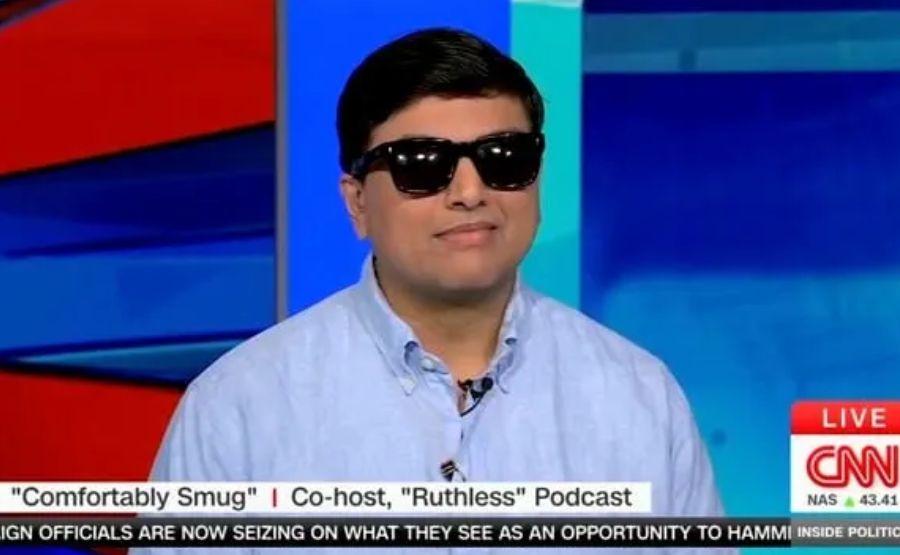
Known online and on air as “Comfortably Smug,” Tripathi is a co-host of the Ruthless podcast, which secured a landmark Fox News licensing deal in July 2025. He appears on major television networks, spars with anchors like CNN’s Dana Bash, and commands an audience of millions — all while wearing dark wraparound sunglasses indoors, on set, under studio lights, in every single appearance. No exceptions.
It is, by any measure, an unusual choice. And it raises one of the most searched questions in political media today: why?
The answer is not simple. It layers practical comfort onto psychological protection, then wraps both in deliberate personal branding — and underneath all of it sits a 2012 scandal that stripped him of everything he had built online. To understand the sunglasses, you first have to understand the man.
Quick Bio
| Detail | Information |
| Full Name | Shashank Tripathi |
| Online Alias | Comfortably Smug (@ComfortablySmug) |
| Born | circa 1983 (age approximately 29 in 2012) |
| Profession | Political consultant, former hedge-fund analyst, podcast co-host |
| Podcast | Ruthless (launched 2020) |
| Platform | Fox News contributor (from July 2025) |
| Known For | Conservative commentary, Hurricane Sandy 2012 misinformation scandal, signature sunglasses |
| Political Affiliation | Republican |
| Co-hosts | Josh Holmes, Michael Duncan, John Ashbrook |
From Wall Street to the Twitter Wars
Shashank Tripathi did not begin as a public figure. He was a hedge-fund analyst in New York — part of a world defined by number-crunching and deliberate obscurity. He also moonlighted as a Republican political consultant, working in campaign management for candidates who moved in establishment GOP circles.
His Twitter account, @ComfortablySmug, was his escape valve. Anonymous and irreverent, it became a gathering point for conservative commentary that was sharp, sarcastic, and deliberately provocative. By 2012, he had built a following that trusted the account’s voice precisely because no one could pin a face to it. Anonymity, in the social media world of that era, was a form of power.
Then came October 2012, and Superstorm Sandy.
See also “Teresa Barrick Now: The Complete Story of the Woman Who Stood Behind Aerosmith’s Front Man“
The 2012 Scandal That Defined Everything
When Hurricane Sandy made landfall on October 29, 2012, New York City descended into genuine chaos. Power failed across lower Manhattan. Hospitals evacuated patients. Transit shut down. In that environment — frightened, dark, information-starved — the @ComfortablySmug account began posting.
The tweets were fabricated. Tripathi falsely claimed the New York Stock Exchange trading floor was submerged under more than three feet of water. He posted that Con Edison workers were trapped inside a building. He spread word of a total Manhattan blackout. Each claim was designed to sound authoritative. Each was false.
Major media outlets, including CNN and the Weather Channel, amplified some of these reports before corrections could catch up. In a disaster scenario, false information does not just confuse — it re-routes resources, generates panic, and erodes public trust in legitimate updates. Tripathi’s tweets caused exactly that kind of damage.
The unmasking came fast. BuzzFeed journalist Jack Stuef conducted a forensic digital investigation, comparing altered photos Tripathi had posted with unedited versions found elsewhere online. The anonymous troll was revealed as a 29-year-old finance professional who also served as campaign manager for Christopher Wight, then a Republican candidate for New York’s 12th Congressional District.
The fallout was immediate and severe. Tripathi resigned from the Wight campaign within hours of the identification. New York City Councilman Peter Vallone Jr. called publicly on the Manhattan District Attorney to explore criminal charges for reckless endangerment — though legal experts noted that prosecuting speech, even reckless speech, faced a very high evidentiary bar. Tripathi himself issued a public apology, acknowledging his tweets were “irresponsible and inaccurate” and accepting full responsibility.
No charges were filed. But his reputation, at least in its original form, was finished.
The Comeback, and the Character
Tripathi did not disappear. He regrouped.
When the Ruthless podcast launched in 2020 as a conservative alternative to shows like Pod Save America, Tripathi was part of the founding lineup. His co-hosts — Josh Holmes (formerly Mitch McConnell’s chief of staff), Michael Duncan, and John Ashbrook, all partners at the public affairs firm Cavalry — brought institutional Republican credibility. Tripathi brought something else: internet native energy, sarcasm, and an outsider edge.
Within months of its launch, Ruthless had hosted eight sitting U.S. senators, three House representatives, one governor, and multiple presidential hopefuls from the Republican Party. By the time Fox News announced its licensing deal in July 2025, the show was drawing approximately five million unique listeners and ranked as a top political podcast among men aged 18 to 45, according to National Research Inc. polling.
Every episode featured Comfortably Smug. Always in sunglasses.
The Four Real Reasons for the Sunglasses
Tripathi has not delivered a full, formal public statement explaining the glasses. He has, however, addressed them in candid podcast moments and behind-the-scenes segments. When CNN anchor Dana Bash pressed him about them during a February 2024 appearance on Inside Politics — the segment where he and the Ruthless crew were discussing Mitch McConnell’s departure from Senate leadership — Bash acknowledged she ran out of time to explore it properly and promised to bring him back specifically to discuss the topic.
His silence, mostly deliberate, has fueled speculation. But the real answer emerges across four distinct layers.
1. Studio Lights Are Genuinely Blinding
Modern video podcast studios use high-intensity LED lighting arrays. The brightness is a physical reality, not a stylistic concern. For someone spending hours per week under those lights without professional broadcast training, it can cause real discomfort and difficulty focusing.
Tripathi has said directly in podcast segments that studio lights are overwhelming. The sunglasses address a practical problem. This is the least dramatic explanation — and it is entirely real.
2. He Does Not Like Looking at Himself on the Monitors
Every modern studio setup includes return monitors: screens that show on-air talent their own live image during recording. This creates an unusual psychological loop — you watch yourself while performing, which can amplify self-consciousness and break the natural flow of conversation.
Tripathi has stated he dislikes making eye contact with his own image on those monitors. The sunglasses cut that feedback loop. They allow the “Comfortably Smug” persona to function as a performance rather than a self-conscious exercise.
This is more revealing than it sounds. Comfortably Smug the character requires a certain unflappable detachment. Looking at yourself in real time while trying to maintain that persona works against the persona itself.
3. A Functional, if Ironic, Privacy Shield
Here is the paradox: Shashank Tripathi’s real name has been publicly known since October 2012. His face is recognizable. His career is a matter of public record. He is not, in any meaningful sense, anonymous.
And yet the sunglasses do function as a privacy layer — not online, but in daily life. When Tripathi removes the glasses, he is simply a man walking through a city. With them on, during appearances, he becomes Comfortably Smug. The glasses are the switch between identities. In ordinary life, the absence of the sunglasses gives him something back: the ability to move without being recognized as “the podcast guy.”
It is privacy through association rather than concealment. The brand lives in the glasses. Take them off, and the brand disappears with them.
4. The Psychological Afterlife of the 2012 Unmasking
This is the layer that observers rarely state directly, but it is perhaps the most significant.
Before 2012, Comfortably Smug drew its power from complete anonymity. The voice was untouchable because it had no face. When BuzzFeed stripped that away, it did not simply end a scandal — it destroyed the fundamental structure of the identity. The persona was built on invisibility. Tripathi lost that in an afternoon.
When he re-emerged as a public figure in the years that followed, he faced an unusual challenge. He was no longer anonymous, but the character he was rebuilding — sharp, irreverent, unapologetically conservative — needed to feel distinct from the disgraced operative who had apologized and stepped away. The sunglasses became the mechanism for that separation.
By covering his eyes, he maintains a physical buffer between the private person and the public figure. His face is visible; his most expressive feature is not. It recreates, imperfectly but effectively, a version of the barrier that anonymity once provided. Some analysts of media persona have called this a “vestigial mask” — a replacement shield for the one that was stripped away in 2012.
Whether Tripathi consciously designed this strategy or arrived at it instinctively is unknown. The effect is the same either way.
The Branding Genius of Never Explaining It
There is a fifth layer, though it operates differently from the others: the strategic value of ambiguity itself.
Tripathi has never given a comprehensive, on-the-record explanation for the sunglasses. That silence is not accidental. In political media, where clarity is supposedly the currency, mystery is a scarce and valuable resource.
The glasses prompt questions. Questions drive searches. Searches bring new audiences to Ruthless. Every article written about the sunglasses — including this one — functions as organic marketing for the persona. The man who peddled misinformation in 2012 has become, in a strange arc, a media figure whose greatest trick is simply refusing to fully explain himself.
The glasses also perform a sorting function. Supporters recognize them as an inside joke — a wink at the absurdity of traditional media norms, a “bit” elevated to a brand element. Critics see them as disrespectful or evasive, a refusal to engage transparently with the audience. Both reactions reinforce the persona. The sunglasses make friends and enemies efficiently, which is exactly what effective political branding is supposed to do.
The CNN Moment: When the Glasses Became a National Conversation
On February 29, 2024, the Ruthless team appeared on CNN’s Inside Politics at Dana Bash’s invitation. The segment discussed Mitch McConnell’s decision to step down from GOP leadership.
Bash referred to Tripathi throughout only by his online alias. She did not use his real name on air. She acknowledged the sunglasses — their presence in her studio, under her lights, on her set — with visible amusement, and she explicitly promised to bring the team back so they could explore “the theories” about the name and the glasses in more depth.
The reaction online was swift and divided. Left-leaning viewers expressed frustration that CNN had portrayed someone they described as a disinformation figure, pointing directly to the 2012 Sandy scandal. Conservative viewers celebrated it as a sign that alternative media had arrived in the mainstream. The sunglasses sat at the center of both conversations — a physical symbol of everything people found either fascinating or aggravating about Comfortably Smug.
Bash did not press Tripathi hard on his 2012 history during the appearance. That omission drew its own criticism from media observers who felt the platform came without sufficient accountability.
The Fox News Deal: Legitimization or Normalization?
In July 2025, Fox News announced it was licensing the Ruthless podcast — the first time the network had made such a deal with an outside show. All four co-hosts became Fox News contributors. The announcement came directly from Fox News Media CEO Suzanne Scott.
For Tripathi specifically, the deal represented a remarkable journey. In 2012, he was a disgraced operative facing the prospect of criminal investigation. By 2025, he was a contributor to the most-watched cable news network in the United States — sunglasses and all.
Fox & Friends promoted the news on July 16, 2025. The accompanying social media posts from critics noted, pointedly, that he wore the sunglasses inside the Fox studio too. One prominent account wrote: “Allow far right Internet troll Shashank Tripathi (@ComfortablySmug) to wear sunglasses inside Studio M. He is not blind.” The comment captured the tension that follows him everywhere: admiration from one audience, contempt from another, and the glasses at the center of both.
What the Sunglasses Actually Tell Us About Modern Media
Shashank Tripathi’s sunglasses are strange only if you expect media figures to follow old conventions. The honest observer has to acknowledge that those conventions are already gone.
He built a persona when anonymity was the internet’s most powerful currency. He lost it in a scandal that demonstrated exactly how much power anonymous voices could wield — and how quickly accountability could arrive. He rebuilt, wearing the lesson visibly on his face in the form of dark lenses that cover the most human part of him.
Whether that rebuilding deserves admiration depends on your prior knowledge of whether the misinformation he spread in 2012 was a meaningful mistake or a trivial mistake. Many people hold it against him. Many others have moved past it. He has addressed it publicly, apologized for it, and continued — which is the most human of trajectories.
The glasses remain. They have become something larger than eyewear.
They are a brand. They are a barrier. They are the physical shape of a comeback that, whatever you think of the politics, is genuinely unusual in American media.
FAQs
1. Why does Shashank Tripathi always wear sunglasses?
Multiple reasons converge: studio lighting discomfort, an aversion to watching himself on monitors, a functional privacy layer in real life, a psychological replacement for the anonymity he lost in 2012, and a branding tool that has become his most recognized trait.
2. Does he have an eye condition that requires sunglasses?
No medical condition has been cited publicly, and Tripathi himself has not made that claim. He has cited practical studio lighting as a contributing reason, but observers have confirmed no known vision-related diagnosis.
3. Who is Comfortably Smug in real life?
His real name is Shashank Tripathi. He is a former hedge-fund analyst and Republican political consultant, and currently a co-host of the Ruthless podcast and a Fox News contributor as of July 2025.
4. What happened to Shashank Tripathi in 2012?
During Hurricane Sandy in October 2012, he spread several fabricated claims on Twitter — including that the New York Stock Exchange trading floor was flooded and Con Edison workers were trapped. Major media outlets repeated some claims before corrections arrived. BuzzFeed journalist Jack Stuef identified him, and Tripathi resigned from a congressional campaign and issued a public apology.
5. Was Shashank Tripathi ever charged with a crime?
No. New York City Councilman Peter Vallone Jr. called on the District Attorney to investigate potential reckless endangerment charges. Legal experts noted the high bar required to prosecute speech, and no charges were filed.
6. When did Comfortably Smug start the Ruthless podcast?
The Ruthless podcast launched in 2020 ahead of the presidential election, positioned as a conservative alternative to shows like Pod Save America.
7. Who are the other hosts of Ruthless?
Josh Holmes (former chief of staff to Senator Mitch McConnell), Michael Duncan, and John Ashbrook — all founding partners of the public affairs firm Cavalry.
8. Has Tripathi ever explained the sunglasses publicly?
He has addressed them briefly in podcast behind-the-scenes segments, citing studio lights and his discomfort watching himself on monitors. He has not given a full, on-the-record explanation. CNN’s Dana Bash noted she wanted to discuss it further but ran out of time.
9. Does he take the sunglasses off in private?
This is unconfirmed. The sunglasses appear in every public and on-camera context. Their absence in private life is part of the privacy function they serve — by keeping the brand tied to the accessory, removing them in public breaks the persona.
10. What did Dana Bash say about the sunglasses?
During a February 29, 2024 segment on CNN’s Inside Politics, Bash joked that there were “theories” about the name and the sunglasses and said she needed more time to explore them, promising to bring the Ruthless team back for that discussion.
11. What was the Fox News deal announced in July 2025?
Fox News struck a licensing agreement with the Ruthless podcast, making all four co-hosts Fox News contributors. Fox News Media CEO Suzanne Scott announced the deal on July 15, 2025, calling it part of the network’s new media expansion.
12. How many listeners does Ruthless have?
According to a Q&A cited by the podcast itself, Ruthless draws approximately five million unique listeners. National Research Inc. polling ranked it as a leading political podcast among men aged 18 to 45.
13. Why do critics still bring up the 2012 Sandy tweets?
Because the misinformation spread during a genuine disaster and was amplified by major news outlets before corrections arrived. Critics argue that any media platform giving Tripathi prominence without addressing that history normalizes disinformation. Supporters argue that his apology and decade-plus of subsequent conduct constitute adequate accountability.
14. Is the sunglasses choice a commentary on media culture?
Partly, yes. By wearing sunglasses on CNN and Fox News sets — environments where conventional transparency is expected — Tripathi signals that he operates outside traditional media norms. His audience reads the glasses as a rejection of mainstream conventions. His critics read them as disrespectful.
15. Has Tripathi spoken about how the 2012 scandal affected him?
Not at length in public. His public apology acknowledged responsibility. The sunglasses, and the slow, deliberate rebuilding of his platform over a decade, are the most visible evidence of how he processed and responded to what happened — though he has never narrated that arc explicitly.
Read, learn, and get inspired with every visit to Brief Magazine.