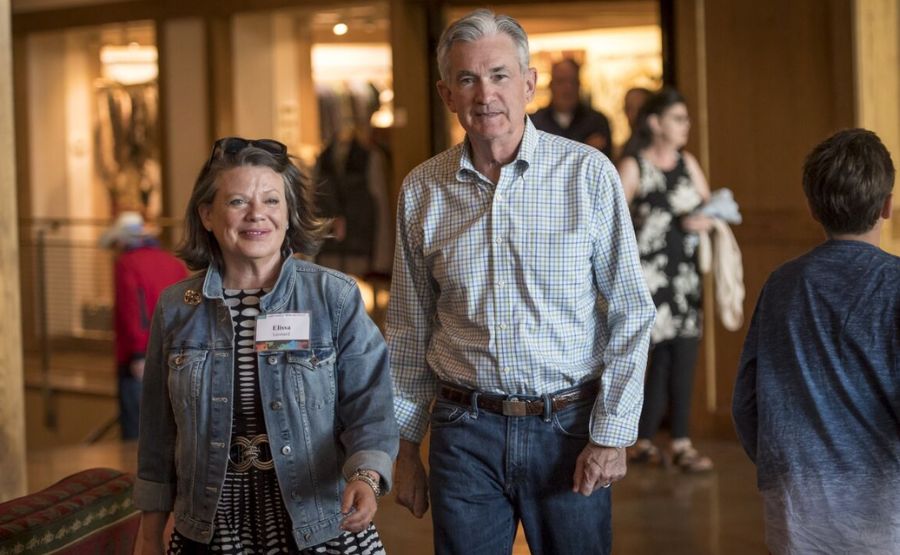
Elissa Leonard: Filmmaker, Civic Leader, and the Woman Behind the Fed Chair
Elissa Leonard matters not because of the man she married, but because of what she built before the world ever noticed her.
She is a Harvard-educated filmmaker, a two-time Emmy Award winner, and the elected head of a municipal government — and she accomplished all of this long before her husband Jerome Powell became the most powerful central banker on the planet. Yet most media coverage reduces her to a footnote in his story. This biography corrects that imbalance.
Quick Bio
| Detail | Information |
| Full Name | Elissa Ann Leonard |
| Date of Birth | May 20, 1957 |
| Birthplace | Rockville, Maryland, USA |
| Education | Harvard College, B.A. 1979 (Visual & Environmental Studies + Government), magna cum laude |
| Profession | Filmmaker, television producer, writer, civic official |
| Notable Works | Sally Pacholok (2015), Ladies in Black (2018), PBS Innovation series |
| Spouse | Jerome H. Powell (married September 14, 1985) |
| Children | Three: Sam, Lucy, and Susie Powell |
| Current Residence | Chevy Chase Village, Maryland |
| Civic Role | Chair, Board of Managers, Chevy Chase Village |
| Awards | 2 New York Emmy Awards; 11 TIVA Peer Award wins; Best Feature, DC Independent Film Festival |
Roots in Rockville: A Family That Valued Learning
Elissa Leonard grew up in Rockville, Maryland, in a household shaped by intellectual ambition and public service.
Her father, George Hill Leonard, was no ordinary figure. He served as a heart disease control administrator for the U.S. Public Health Service in Washington, D.C. — a man who spent his career applying science to save lives. Her mother, Phyllis Leonard (née Bachner), was a graduate of both Boston University and Radcliffe College, a combination that spoke clearly to the family’s academic values. Elissa was the middle child, with two brothers named Jeffrey and Jonathan.
She attended Montgomery County Public Schools, the same district that shapes hundreds of thousands of Maryland children every year. What distinguished her was the direction she chose after it: Harvard University.
See also “LeTesha Marrow: Building a Life Beyond the Famous Name She Was Born Into“
Harvard, 1979: The Making of a Storyteller
Elissa Leonard entered Harvard College and left it in 1979 with a degree awarded magna cum laude — a distinction that places her among the top graduates of her year.
Her chosen majors were unusual in combination: Visual and Environmental Studies alongside Government. One track trained her eye for image and narrative. The other trained her mind for systems, policy, and power. Together, they produced a person capable of making films about the world as it actually is, not just as it looks on screen.
She did not follow the obvious path to law school or Wall Street. She went straight into television production, beginning a career that would span four decades and two very different industries: media and municipal governance.
Building a Career Brick by Brick: Public Television in the 1980s
The media industry is brutally competitive. Elissa Leonard entered it at the ground level and earned her way up.
Her first major platform was WNET-TV Channel 13 in New York, the flagship PBS station. There she worked as a producer and writer on the Innovation series, a weekly science and technology program that ran from 1984 through 2004 on public television. The show grew from a local half-hour magazine format into a nationally broadcast series of documentary specials, covering health, science, and emerging technologies. Copies of the series eventually found their way into hundreds of libraries across the United States and internationally.
That work earned Leonard two New York Emmy Awards from the National Academy of Television Arts and Sciences — real recognition in a field full of talented people.
National Geographic, Educational Film, and a Growing Reputation
After establishing herself at WNET, Leonard moved into another prestigious institution.
She served as Senior Story Editor at National Geographic Television’s Explorer series, one of the most-watched documentary programs on American television during that era. Her responsibilities there required not just production skill but editorial judgment — knowing which stories deserved attention and how to shape them for a broad audience.
She also worked as a producer at The Educational Film Center on two series: Powerhouse and Give and Take. These projects focused specifically on younger audiences and educational content, reflecting a consistent thread in her career: a preference for work that informs rather than simply entertains.
Publicly, she was building a résumé. Privately, she was shaping a personal philosophy about what stories are worth telling.
Sally Pacholok: The Film She Had to Make
In 2015, Elissa Leonard released a feature film that showed the full range of what she could do.
Sally Pacholok told the true story of an emergency room nurse who discovered that thousands of patients were being misdiagnosed — specifically, a widespread failure to detect Vitamin B12 deficiency. The real Sally Pacholok spent years fighting a resistant medical establishment before her findings were eventually accepted. Leonard co-wrote the screenplay, directed the film, and served as executive producer. The lead role was played by Annet Mahendru, known at the time for her work on FX’s The Americans.
The film premiered at the 2015 DC Independent Film Festival, where it won the Best Feature award. It then collected 11 awards at the Television, Internet, and Video Association (TIVA) of Washington D.C.’s Peer Awards. Leonard personally received silver awards for both independent feature filmmaking and directing.
The film holds an 8.4 rating on IMDb as of this writing. For an independent production with no major studio support, that is a substantial achievement.
Ladies in Black: A Different Kind of Story
After Sally Pacholok, Leonard did not retreat into comfort.
Her next major project was Ladies in Black (2018), an Australian period comedy directed by Bruce Beresford — the same filmmaker behind Driving Miss Daisy and Tender Mercies. The film was adapted from Madeleine St. John’s beloved novel The Women in Black, set in a Sydney department store in the 1950s. Leonard served as executive producer.
The film starred Julia Ormond and earned an 88% score on Rotten Tomatoes, connecting with audiences across Australia and internationally. Working with Beresford placed Leonard in serious company — this was a filmmaker with Academy Award nominations to his name. The collaboration said something about how she was regarded within the industry.
She also has a project called Sadie Q in development, listed on her IMDb profile as a film she serves as both producer and development executive.
The Professional Identity She Chose to Keep
One detail about Elissa Leonard is quietly significant: she kept her maiden name professionally throughout her marriage.
When Jerome Powell began rising in public life — first at the Treasury Department in the early 1990s, then as a Federal Reserve governor from 2012, and finally as Fed Chair from February 2018 — she remained Elissa Leonard in her work. That is a deliberate choice. It means her career credits belong entirely to her, not to the reflected prestige of her husband’s title.
In Washington, where association and proximity to power are currencies traded constantly, this quiet insistence on professional independence stands out.
How She Met Powell: A Story Told Through a Sister
The story of how Elissa Leonard and Jerome Powell found each other begins with Powell’s sister.
In the early 1980s, Powell’s sister was Leonard’s housemate, according to reporting by the Financial Times. The connection was personal before it was romantic — a friendship that grew into something more serious. They married on September 14, 1985, at the Bethlehem Chapel inside the Washington Cathedral. The ceremony was officiated by Rev. Arthur Jellis, a Unitarian minister, and also by a Roman Catholic priest — Powell’s uncle, Rev. Ralph Austin Powell. Two faith traditions in one ceremony: a detail that reflected the family’s layered background rather than a desire for spectacle.
The announcement of their marriage appeared in The New York Times, which means it was noted by the world even in 1985. What the world did not yet know was how consequential that union would become.
Building a Family with Privacy as a Foundation
Jerome and Elissa Powell have three children: Samuel, Lucy, and Susie.
None of the three children has sought public attention. There are no public photographs, no social media profiles, no interviews. This is not an accident. Leonard made a sustained, deliberate effort to raise her children outside the spotlight, even as their father negotiated trillion-dollar monetary policy and testified before U.S. Senate committees. In a city where access and visibility are treated as personal assets, she chose to protect her children from the machinery entirely.
That choice speaks to a value system. Fame is not the goal. Stability is.
Chevy Chase Village: Governing a Community with Real Stakes
Elissa Leonard’s civic life deserves more than a footnote.
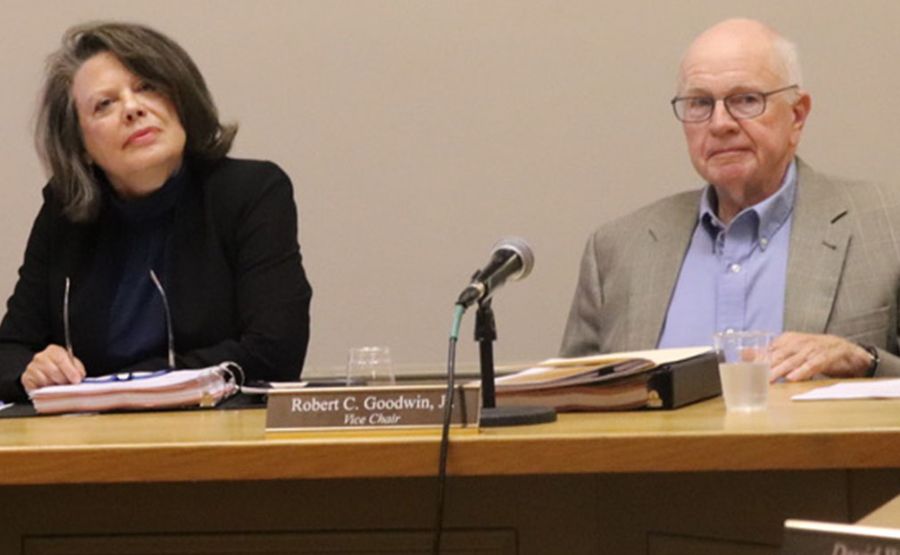
She joined the Chevy Chase Village Board of Managers in 2013, having lived in the community for more than 25 years. She eventually rose to Chair of the Board of Managers — the elected head of this small but affluent Maryland municipality, a Washington, D.C. suburb with its own police force, municipal government, and budget. Before her board chairmanship, she served as Chair of the Buildings and Facilities Commission and participated in the Tree Committee, Parks Committee, and Environment & Energy Committee.
Her tenure as Board Chair involved real decisions with real consequences. In 2019, she presided over one of the most contentious votes in the village’s recent history: whether to dismantle a newly built dog park. More than 100 residents packed the public hearing. Dog owners wore matching white hats in protest. When the board voted 5-2 to remove the park, the crowd erupted. Leonard remained composed, explaining the decision calmly before the demonstrators walked out.
“We have to move on to the next item on our agenda,” she told the remaining audience, moving directly to the next topic: noise from gas-powered leaf blowers.
That composure under pressure matters. It is not just a personality trait. It is a governing posture.
Taking on the Village’s Racist History
Leonard’s most significant act as Board Chair may have been one of the most uncomfortable.
In 2020, the board she led approved a formal resolution acknowledging the racist ideology of Francis Griffith Newlands, the 19th-century developer who founded Chevy Chase. Newlands had deliberately designed his developments to exclude Black, Jewish, and working-class families. A memorial fountain in Chevy Chase Circle bore his name for decades.
Speaking on behalf of the board, Leonard stated publicly that the village did not want the fountain’s memorial “to be seen as honoring systemic racism and discrimination that is incompatible with the values of Chevy Chase Village.” This supported federal legislative efforts by U.S. Senators Chris Van Hollen and Ben Cardin to remove Newlands’ name from the public landmark.
This was not a risk-free position in an affluent conservative suburb. It was a principled one.
Awards, Boards, and the Texture of Her Public Life
Leonard’s involvement in Washington-area cultural life extends well beyond the Village government.
She sits on the Board of Trustees of Levine Music, a nonprofit that provides music education to children and adults across the D.C. metropolitan area. She is a member of the Board of Directors of the Chevy Chase Historical Society. She has also served on the Advisory Board of the DC Independent Film Festival — the same festival that premiered Sally Pacholok in 2015.
She earned a Trustee role at the Washington Drama Society. Her film Monk in Pieces is listed on Rotten Tomatoes with a 92% score as of 2025, suggesting that her producing work continues to find critical recognition.
These affiliations add up to a portrait of someone deeply embedded in the cultural and civic fabric of her region — not because of who she married, but because she chose to be.
What Remains Private — and Why That Matters
There are things about Elissa Leonard that the public does not know, and that is by design.
Her exact net worth is not publicly documented. The household net worth of Jerome Powell has been estimated at between $19.7 million and $55 million based on federal financial disclosures, but these are his assets, not hers individually. She has not sought visibility as a wealthy person, despite living in one of the most affluent communities in the United States.
Her social media presence is minimal. Her religion has never been clearly stated publicly; the dual-faith wedding ceremony suggests a household that treats belief as personal rather than performed. Her children’s lives remain entirely private.
This consistency — across 40 years of marriage, multiple high-profile moments, and a husband who has moved through some of the most scrutinized roles in American governance — reflects a settled, genuine preference for privacy.
The Bigger Picture: A Life Defined by Choices
Elissa Leonard has been making deliberate choices since she walked out of Harvard in 1979.
She chose public broadcasting over commercial television, stories of social importance over entertainment products, a kept maiden name over borrowed identity, civic service over socialite visibility, and consistent privacy over the proximity-to-power performance that Washington rewards so generously.
None of these choices made her famous. All of them made her credible.
She is not a perfect or uncomplicated figure — no honest biography should claim otherwise. The dog park controversy was minor but real: some residents felt the board’s decision was dismissive of genuine community desires. Her wealth and community are reflections of an exclusive enclave. These are the actual textures of real life.
But the arc of her choices, measured against the opportunities she had to take easier paths, suggests someone who knew what she valued and stuck to it.
FAQs
1. Who is Elissa Leonard?
Elissa Leonard is an American filmmaker, television producer, writer, and civic official. She is also the wife of Jerome Powell, Chair of the U.S. Federal Reserve.
2. Where was Elissa Leonard born?
She was born on May 20, 1957, in Rockville, Maryland, USA.
3. Where did Elissa Leonard go to college?
She attended Harvard College, graduating magna cum laude in 1979 with a joint major in Visual and Environmental Studies and Government.
4. What is Elissa Leonard most famous for professionally?
Her most celebrated work as a filmmaker is Sally Pacholok (2015), which she co-wrote, directed, and produced. She is also known for her Emmy Award-winning work on the PBS Innovation series and her role as executive producer on Ladies in Black (2018).
5. When and where did Elissa Leonard marry Jerome Powell?
They married on September 14, 1985, at the Bethlehem Chapel inside the Washington Cathedral, with the ceremony officiated by both a Unitarian minister and a Catholic priest.
6. How did Elissa Leonard and Jerome Powell meet?
According to reporting by the Financial Times, they met in the early 1980s through Powell’s sister, who was Leonard’s housemate at the time.
7. Do Elissa Leonard and Jerome Powell have children?
Yes. They have three children: Samuel, Lucy, and Susie Powell. All three live very private lives away from public attention.
8. What awards has Elissa Leonard won?
She has won two New York Emmy Awards for her work on the PBS Innovation series, 11 awards from TIVA Washington D.C.’s Peer Awards, and the Best Feature award at the DC Independent Film Festival for Sally Pacholok.
9. What is Elissa Leonard’s role in Chevy Chase Village?
She joined the Board of Managers in 2013, previously served as Chair of the Buildings and Facilities Commission, and currently serves as Chair of the Board of Managers — the elected head of this Maryland municipality.
10. Did Elissa Leonard keep her maiden name?
Yes. She retained her professional name “Elissa Leonard” throughout her marriage, keeping her creative and civic credits entirely separate from her husband’s title.
11. What was the Newlands controversy and how was Leonard involved?
In 2020, Leonard’s board issued a resolution distancing Chevy Chase Village from the racist legacy of its founder, Francis Newlands, publicly supporting federal efforts to remove his name from a memorial fountain in Chevy Chase Circle.
12. What is Elissa Leonard’s net worth?
Her individual net worth is not publicly documented. The combined household net worth of Jerome Powell has been estimated at up to $55 million based on federal financial disclosure filings.
13. Is Elissa Leonard on social media?
She has a Twitter/X handle (@elissaleonard), but her presence there is minimal. She has not sought public visibility through social platforms.
14. What is Ladies in Black about?
Ladies in Black (2018) is an Australian period comedy directed by Bruce Beresford, adapted from Madeleine St. John’s novel. Leonard served as executive producer. The film earned an 88% critical score on Rotten Tomatoes.
15. What is Elissa Leonard working on now?
As of available records, she has a project called Sadie Q in development, listed on IMDb as a film in pre-production in which she serves as both producer and development executive.
Read, learn, and get inspired with every visit to Brief Magazine.