Brita Ingegerd Olaisson: The Private Life Behind a Public Legacy
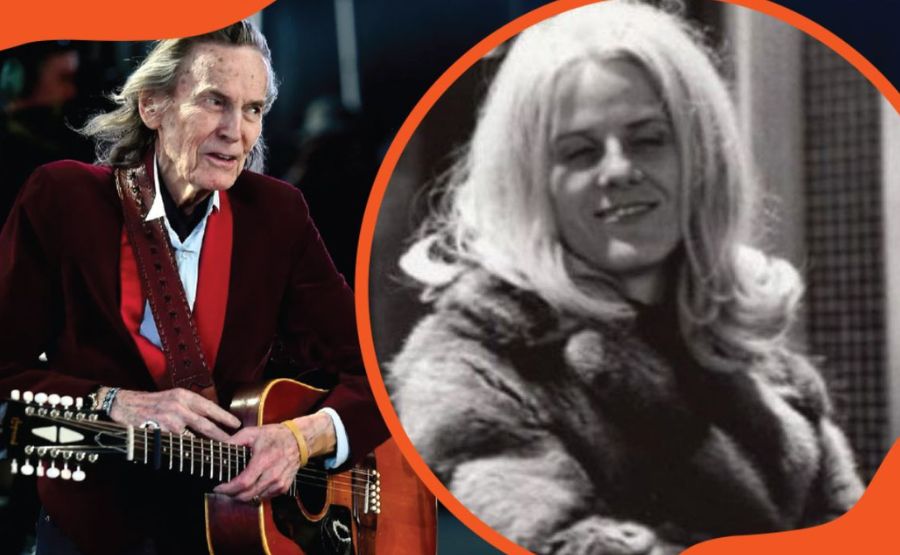
She never recorded an album, gave an interview, or sought a single headline — yet Brita Ingegerd Olaisson shaped one of the most emotionally powerful songs in the history of Canadian music. Her story matters not because of fame, but because of what it reveals about the real human cost of life in an artist’s orbit.
Quick Bio
| Detail | Information |
| Full Name | Brita Ingegerd Kristina Olaisson |
| Born | Circa 1935, Sweden |
| Died | June 8, 2005, Scarborough General Hospital, Ontario, Canada |
| Age at Death | 69–70 years |
| Nationality | Swedish-Canadian |
| Known For | First wife of Gordon Lightfoot |
| Married | April 1963, Stockholm, Sweden |
| Divorced | 1973 |
| Children | Fred Lightfoot, Ingrid Lightfoot |
| Grandchildren | Amber, Johnny, Ben |
| Remarried | No |
A Young Woman Who Crossed an Ocean
Sweden in the mid-twentieth century was a country of quiet prosperity and strong civic values. Brita Olaisson grew up there, born around 1935, in a world that valued practicality, steadiness, and community. The details of her parents, her hometown, and her early schooling were never made public — and she appeared to prefer it that way.
What she did, in her early adult years, was bold. She left Sweden and relocated to Toronto, Canada, with a specific and sensible goal: to learn English. The decision reflected the practical intelligence that those who knew her would consistently describe throughout her life.
In Toronto, she secured employment at the local office of M.P. Hofsetter, a Swedish typewriter and office-supply firm. She was building a life on her own terms, far from home, in a city she had never lived in before. That independent step brought her directly into the path of someone whose name she would carry, in various ways, for the rest of her life.
See also “Yelba Osorio: Actress, Immigrant, Nurse, and the Storyteller Who Never Stopped“
The Meeting That Changed Everything
In 1962, Brita was living in a rooming house in Toronto’s Annex neighborhood. Gordon Lightfoot — a young, ambitious musician from Orillia, Ontario — lived in the same building. He was 23 years old and grinding through the early years of a solo career that had not yet taken flight.
By every account, Brita made an impression immediately. Lightfoot’s authorized biographer Nicholas Jennings, in his 2017 book Lightfoot, described her as sharp, attractive, and composed — someone with a level head and genuine financial acumen. She was not a backstage groupie or a casual acquaintance. She was a serious, intelligent young woman navigating a foreign country with confidence.
They connected. They dated. And within a year, the relationship became something much more significant.
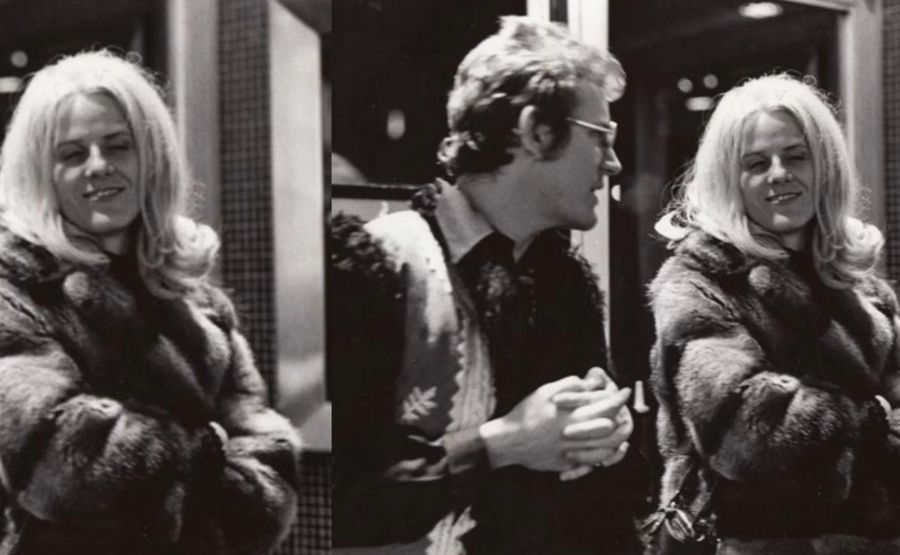
Marriage in Stockholm: April 1963
Gordon Lightfoot and Brita Ingegerd Olaisson married in April 1963 in Stockholm — her city, her country, her terms in at least that respect. The ceremony took place as Lightfoot’s career remained in its uncertain early phase. He was not yet a star. He was a working musician with ambition and talent but no guarantee of either.
The couple spent their first summer together in London, England, where Lightfoot appeared in a BBC television series. They then traveled through Ireland before returning to Toronto. By the time they arrived back in Canada, Brita was already pregnant with their first child.
Those early months carried a warmth that later years would make difficult to fully reclaim. But even then, the pressure that would eventually fracture the marriage was quietly building. Lightfoot’s career demanded constant motion. The music industry does not pause for domestic life.
The Role She Actually Played
History has a way of reducing the partners of famous artists to decorative footnotes. Brita Olaisson was something considerably more useful than that.
According to Jennings’s detailed biography, Brita served as a genuine professional partner in Lightfoot’s early career. She had strong mathematical ability and a calm, analytical mind. She acted as a financial sounding board, helping Lightfoot think through decisions during the years when one wrong move could have ended everything. Lightfoot himself, in interviews over the decades, called her “a really good person” and “a strong woman” — praise that, coming from someone not known for sentimental overstatement, carried real weight.
She was, in short, not simply married to an artist. She was partly responsible for keeping the infrastructure of that artist’s life functional during the years it mattered most.
Two Children and a Growing Distance
Fred Lightfoot was born in 1964. Ingrid followed, arriving on New Year’s Eve, 1965. Brita was now raising two children while her husband’s schedule pulled him further away from the family home with every passing month.
Lightfoot’s tours stretched across Canada, then into the United States, then internationally. Each success demanded another tour. Each tour added another stretch of weeks — sometimes months — when Brita managed everything alone. She was the constant in the household. He was the recurring visitor.
The loneliness of that arrangement would have tested any marriage. But there was something more corrosive than absence at work here.
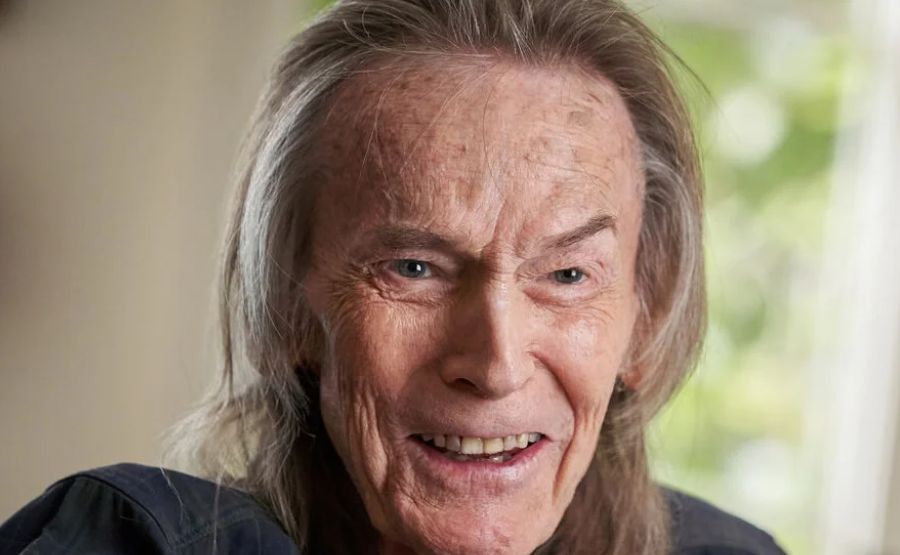
When Things Fell Apart
Lightfoot was candid about his failures, both publicly and in court. Touring, in his own telling, opened a door to alcohol and infidelity that he walked through repeatedly. He had affairs with women in cities across the continent. He came home emotionally compromised and often volatile.
The marriage deteriorated through the late 1960s. The frequency and intensity of arguments increased.. In 1969, during one particularly bad confrontation, Lightfoot drove his fist through a door, breaking his hand. It was, as Jennings observed, an ugly and precise metaphor for where the relationship stood.
That same summer, Lightfoot moved out of the family home and into a large, nearly empty house he had purchased at 222 Blythwood Road in north Toronto. It was there, alone with a wicker chair and a Quebec farmhouse table, that he wrote “If You Could Read My Mind.” The song poured out of him in a single afternoon.
Brita and the children remained in the family home while their marriage dissolved from across the city.
The Song She Inspired Without Wanting To
“If You Could Read My Mind” was released in 1970 on the album Sit Down Young Stranger. It reached number one on the Canadian singles chart and number five on the American Billboard Hot 100. It has since been covered nearly two hundred times, by artists ranging from Barbra Streisand to Neil Young to Don McLean.
The song is, at its core, a confession. It describes the moment when love fades and neither partner can explain why or get it back. Lightfoot later said openly that the song emerged directly from the emotional devastation of the marriage’s collapse. He described sitting alone in that empty house, going through “some emotional trauma leading up to a separation,” and the song simply arriving.
Brita never gave a public response to the song. She did not need to. Her daughter Ingrid eventually did it for her. In later years, Ingrid asked her father to stop performing “For Lovin’ Me” — an earlier Lightfoot song with lyrics she described as dismissive and hurtful to her mother. Lightfoot stopped. He later admitted the song embarrassed him too. “It was an embarrassment to my wife at the time,” he said in his 2019 documentary.
Publicly, the music was celebrated. In private, Ingrid’s anger about what those words meant to her mother told a different story entirely.
The Divorce and Its Consequences
The marriage officially ended in 1973. At the time, divorce was still a matter of genuine social stigma in Canada, and the proceedings attracted significant media attention. Lightfoot did not attempt to minimize his responsibility. In court, he admitted to adultery.
The settlement was substantial by any standard. Brita received custody of both children, monthly support payments of $4,500, and $150,000 to purchase a home. By the financial standards of 1973 Canada, these were remarkable figures — and the settlement was widely reported as one of the largest of its kind in the country at that time.
The money provided security. But it could not undo a decade of emotional turbulence, infidelity, and the grinding loneliness of raising children while a famous husband toured the world.
Lightfoot, for his part, struggled openly with the aftermath.He stated years later: “It took me years to move past the breakup of my first marriage. I had a good wife and two great kids, but the business just ate me up. The women ate me up.” He also acknowledged that he missed her stability far too late. “Brita gave me a sense of security that I lost as soon as she went back to Sweden,” he said at one point.
Life After the Spotlight
After the divorce, Brita Olaisson did something that, in an era of celebrity gossip and tell-all memoirs, was almost radical: she chose silence.
She did not give interviews. She did not write a book. She did not cultivate a public profile or leverage her proximity to fame for personal attention. She raised her children, Fred and Ingrid, in Toronto. She split her time in later years between a home at Lake Simcoe in Ontario and another property in Montego Bay, Jamaica — a calm, comfortable life on her own terms.
She never remarried.
Her grandchildren — Amber, Johnny, and Ben — became a central joy in her later years. Ingrid, speaking after her mother’s death, described a woman almost entirely unlike the tragic victim that tabloid summaries might suggest. Brita was, by her daughter’s account, “a very happy person and lots of fun. Very stable.She spent a lot of time with her grandchildren and loved them very much.
She gardened. She cooked. She developed a serious interest in antiques. She cared for her own health with genuine discipline, and despite being nearly seventy, looked considerably younger to those who knew her.
Death and What She Left Behind
Brita Ingegerd Kristina Olaisson died at Toronto’s Scarborough General Hospital on June 8, 2005. She was in her seventieth year. The family requested donations to the Heart and Stroke Foundation in her memory. A service was held at the Dixon-Garland Funeral Home in Markham, Ontario. She was cremated.
Her death notice was small and dignified — exactly as her life had been. It named her as “Beloved Mother of Fred (Leynie) and Ingrid (Terry)” and “Much loved Granny of Amber, Johnny and Ben.” Gordon Lightfoot was listed simply as “fondly remembered by her former husband Gordon.”
Eighteen years later, on May 1, 2023, Gordon Lightfoot died of natural causes at age 84 in Toronto. He had married twice more after Brita — to Elizabeth Moon in 1989, and to Kim Hasse in 2014. But in interviews across the decades, the marriage to Brita remained the one he returned to most honestly when reflecting on regret.
Her Legacy: More Than a Footnote
Brita Olaisson’s legacy operates on three levels, none of which she sought.
The first is musical. “If You Could Read My Mind” endures as one of the defining breakup songs of the twentieth century, and her lived experience is inseparable from its emotional core. Millions of people have heard that song without knowing her name. She is in every line of it.
The second is legal. The 1973 divorce settlement was, by contemporary accounts, among the most significant spousal support awards in Canadian legal history at that time. It contributed to evolving national conversations about financial equity in marriage dissolution — an unlikely legacy for a woman who simply wanted privacy.
The third, and most lasting, is personal. She raised two children who carried her values forward. She built a life of genuine contentment without public validation. She proved that a person can pass through the machinery of celebrity — the attention, the pain, the public dissection — and emerge on the other side as an intact, dignified human being.
That is not a small thing. It is, in fact, quite rare.
FAQs
1. Who was Brita Ingegerd Olaisson?
She was a Swedish-born woman who immigrated to Canada in the early 1960s and became the first wife of Canadian folk legend Gordon Lightfoot. She is known for her role as a mother, her dignified post-divorce life, and her indirect but significant influence on Lightfoot’s most celebrated songs.
2. When and where was Brita Olaisson born?
She was born in Sweden around 1935. Specific birth date and hometown details were never publicly disclosed, and she made no effort to change that in her lifetime.
3. How did Brita meet Gordon Lightfoot?
They met in 1962 while both living in a rooming house in the Annex neighborhood of Toronto. Lightfoot was at the start of his solo career; Brita had recently arrived from Sweden to learn English.
4. When did Brita and Gordon Lightfoot marry?
They married in April 1963 in Stockholm, Sweden — Brita’s hometown.
5. Did Brita Olaisson have a professional role in Gordon Lightfoot’s career?
Yes. According to biographer Nicholas Jennings, Brita served as a financial advisor and sounding board during Lightfoot’s early career years, contributing her strong mathematical skills to practical career decisions.
6. Which of Gordon Lightfoot’s songs were about Brita?
If You Could Read My Mind” (1970) is the most famous — written during the collapse of their marriage. “For Lovin’ Me” and “Can’t Depend on Love” are also linked to emotions from their relationship. Lightfoot eventually stopped performing “For Lovin’ Me” after his daughter Ingrid asked him to, saying it reminded her of her mother’s pain.
7. Why did the marriage end?
The marriage ended due to a combination of factors: Lightfoot’s constant touring, his admitted alcohol use, and his multiple infidelities with women he met while on the road. He acknowledged these failures publicly and in divorce proceedings.
8. What did Brita receive in the divorce settlement?
Under the 1973 settlement, Brita received full custody of their two children, monthly support payments of $4,500, and $150,000 to purchase a home. The settlement was reported as one of the largest of its kind in Canada at that time.
9. Did Brita Olaisson ever remarry?
No. After the divorce, she chose to remain single. She focused on her children and, in later years, her grandchildren.
10. What was Brita’s life like after the divorce?
She lived quietly and contentedly in Toronto, splitting time between a property at Lake Simcoe and one in Montego Bay, Jamaica. She gardened, cooked, studied antiques, and was remembered by her daughter as genuinely happy, stable, and devoted to her family.
11. How did Brita Olaisson die?
She passed away on June 8, 2005, at Scarborough General Hospital in Toronto, following complications from a stroke. She was in her seventieth year.
12. How did Gordon Lightfoot acknowledge Brita after her death?
He was listed in her official death notice as her “fondly remembered former husband.” Over the years in interviews, he consistently credited her as a good person and a strong woman, and expressed regret that his career choices and personal failures had ended the marriage.
Read, learn, and get inspired with every visit to Brief Magazine.