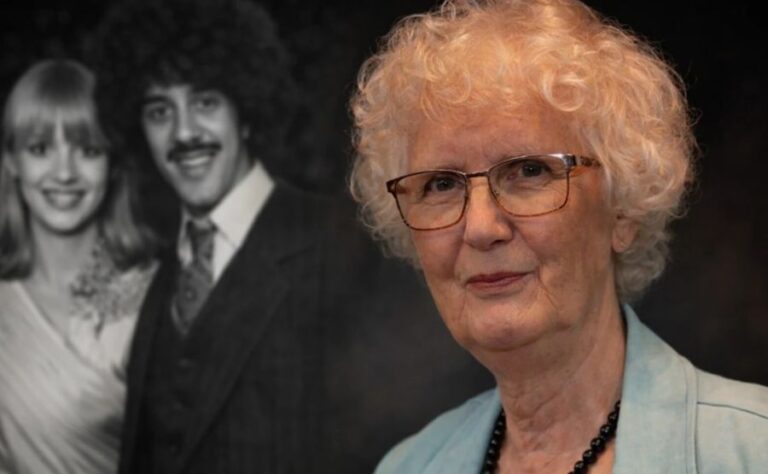
Kim Phillips-Fein: The Historian Who Reads America’s Present Through Its Past
Few historians writing today make the past feel as urgently alive as Kim Phillips-Fein. Her books have reshaped how scholars and general readers alike understand the roots of inequality, austerity, and conservative power in modern America. Her third book, Country of Lords, arrived in 2026 and confirmed what her earlier work had already made clear: she is among the most important voices in American historical writing today.
Quick Bio
| Detail | Information |
| Full Name | Kimberly Phillips-Fein |
| Born | August 1975, New York City |
| Raised | Downtown Brooklyn, New York |
| Education | B.A. History, University of Chicago (1997); Ph.D. American History, Columbia University (2005) |
| Doctoral Thesis | Top-Down Revolution: Businessmen, Intellectuals and Politicians Against the New Deal |
| Current Position | Gardiner–Kenneth T. Jackson Professor of History, Columbia University |
| Previous Positions | Faculty, NYU Gallatin School of Individualized Study; NYU History Department |
| Major Books | Invisible Hands (2009); Fear City (2017); Country of Lords (2026) |
| Awards | 2018 Pulitzer Prize Finalist (History); 2020 Guggenheim Fellowship; 2025 Fiorello La Guardia Book Prize |
| Also Published In | The New York Times, The New Republic, The Nation, New York Review of Books, Jacobin |
| Website | kimphillipsfein.com |
A Brooklyn Childhood at the Center of History
Kim Phillips-Fein was born in New York City in August 1975. The timing was not incidental. That same summer, city officials drafted a press release announcing a default on New York’s debt. The document was never sent. But the crisis it represented — the moment New York nearly went bankrupt — would eventually become the subject of her most celebrated book.
She grew up in downtown Brooklyn in the years immediately following the fiscal crisis. Her parents worked as doctors at Lincoln Hospital in the Bronx, a public hospital struggling with severe resource constraints during the austerity years. Phillips-Fein has described a childhood that felt ordinary but was in fact shadowed by history: the X-rated movie theaters on Court Street, the methadone clinic down the block, the graffiti on subway cars. She never experienced these things as frightening. But she later came to understand them as the visible effects of a political decision — the decision to defund public services for the poorest New Yorkers.
That early proximity to urban life at its most strained left a mark. It gave her work an unusual quality: the careful distance of a trained academic combined with the genuine emotional weight of someone writing about a place she has always loved.
See also “Hermine Poitou: The French Designer Who Chose Her Work Over the Spotlight“
Education and the Making of a Historian
Phillips-Fein earned her undergraduate degree in history from the University of Chicago in 1997. She then returned to her hometown to pursue a doctorate at Columbia University, completing her Ph.D. in 2005. Her dissertation, titled Top-Down Revolution: Businessmen, Intellectuals and Politicians Against the New Deal, laid the intellectual groundwork for her first book.
The Columbia years shaped her approach to history in fundamental ways. She became drawn to questions about power — not just grassroots power, but the boardroom kind. She noticed that most scholarship on American conservatism focused on popular backlash: white working-class resentment, culture-war politics, anxieties about race and gender. She thought this told only part of the story. The business community had been organizing quietly against economic liberalism since the 1930s. Nobody had traced that arc in full.
After completing her doctorate, she joined the faculty at New York University, where she taught at the Gallatin School of Individualized Study. In 2008–09, she received an NYU Center for the Humanities Fellowship, which gave her the time and resources to complete her first book. She would remain at NYU for many years before moving to Columbia, where she now holds the Gardiner–Kenneth T. Jackson Professorship in History.

Invisible Hands: Rewriting the Story of the American Right
Published in 2009 by W.W. Norton, Invisible Hands: The Businessmen’s Crusade Against the New Deal arrived to immediate critical attention. The book traced the rise of conservative economic ideology from the 1930s through Ronald Reagan’s election in 1980. Its central argument was precise and provocative.
Phillips-Fein did not locate the origins of American conservatism in the culture wars of the 1960s and 1970s. She located them in the corporate boardrooms of the 1930s. A small but determined network of business leaders had opposed Franklin Roosevelt’s New Deal from the moment it began. They built think tanks. They funded fellowships. They nurtured intellectuals. They translated the abstract ideas of Friedrich Hayek and Ludwig von Mises into practical political messaging. This was not a movement of working-class resentment. It was a movement of deliberate elite organization, sustained across generations, patient in the extreme.
The book drew praise across the political spectrum. It gave historical depth to debates that had previously felt contemporary. Critics pointed out that the narrative arc was almost too clean — a story of a single, unified movement marching steadily toward Reagan, with few detours and fewer contradictions. Phillips-Fein later acknowledged this herself. The seamlessness of Invisible Hands partly motivated her next project, which would be messier, more contingent, and more deeply human.
Fear City: New York at the Brink
Fear City: New York’s Fiscal Crisis and the Rise of Austerity Politics was published in 2017, eight years after Invisible Hands. It was a different kind of book in almost every way.
Where Invisible Hands operated at the level of ideas and elite networks, Fear City descended into the streets. It told the story of the 1975 New York City fiscal crisis — the moment the city ran out of money and the question of who would pay for that became a war over what kind of city New York would be. Phillips-Fein spent years in archives, unearthed documents that had never been used before, and interviewed people who had lived through the crisis at every level of city life.
Her core argument challenged decades of conventional wisdom. The standard story held that New York’s fiscal problems in the 1970s were the result of irresponsible liberal spending, and that the budget cuts that followed were painful but necessary medicine. Phillips-Fein disputed both claims. The spending, she argued, reflected genuine commitments to public health, education, and transit — commitments that an unusually generous city had built over the postwar decades. And the austerity response was not inevitable. It was a political choice, driven by bankers and ideologues in the Ford administration who saw New York’s crisis as an opportunity to demonstrate that social liberalism could not survive.
The cuts were severe and lasting. The public workforce shrank by roughly 20 percent over five years. Hospitals closed. The City University of New York imposed tuition for the first time in its history. Fire companies shut down in neighborhoods where fires were already burning. These were not acts of technical budget management. They were acts of political will.
Fear City won a Publishers Weekly Top Ten designation for 2017, was shortlisted for the Brooklyn Public Library Literary Prize, and was named a finalist for the 2018 Pulitzer Prize in History. In 2025, nearly a decade after publication, the book won the Fiorello La Guardia Book Prize — a recognition that arrived at a moment when its arguments felt, if anything, more relevant than when the book first appeared.

The Texture of Urban Life That Got Lost
One of the book’s most powerful qualities is what it recovers from the record. Before the crisis, New York had something unusual in the American context: a genuine commitment to public goods for all residents. Free tuition at CUNY. A vast network of public hospitals and clinics. Subsidized childcare. A public transit system sustained by real investment.
Phillips-Fein describes this world without idealization. She acknowledges that mid-twentieth-century New York was deeply racially segregated. Its liberalism was real but incomplete. Black and Latino New Yorkers were often excluded from the very institutions that defined the city’s progressive reputation. CUNY’s landmark open admissions policy — which guaranteed any city high school graduate a seat at a campus — was adopted in 1970, just years before the crisis stripped funding from the very students it had admitted.
This tension runs through the book. The austerity era did not fall evenly. Hospitals in Harlem closed while those in wealthier neighborhoods survived longer. Schools in Central Harlem shut at higher rates than elsewhere. Communities that had only recently begun to access public institutions found those institutions disappearing just as they arrived.
Phillips-Fein documents the resistance as carefully as she documents the cuts. A coalition of Polish and Italian residents in North Williamsburg occupied their fire station for 16 months rather than let the city close it. Community groups rallied around public hospitals. Teachers’ unions fought layoffs. The resistance was real. But it was also limited, divided, and ultimately unable to stop the broader transformation of the city.
The Limits Phillips-Fein Identifies in Her Own Work
One of the most striking qualities of Kim Phillips-Fein as a scholar is her willingness to state plainly what her books did not do.
She has noted that Fear City stops at the end of the crisis period and does not fully trace the new institutions — Business Improvement Districts, park conservancies, real estate tax subsidies — that grew out of the austerity years and defined New York’s public life for decades afterward. She wanted to write about the PTA fundraising culture that emerged in well-funded schools as a substitute for public investment. She wanted to track how the city’s politics gradually came to treat real estate development as its primary purpose. There is, she has suggested, another book waiting to be written.
That kind of intellectual honesty is rarer than it should be. It also signals something important about how she understands history: not as a settled story, but as an ongoing argument.
Country of Lords: The Longest Arc
Her 2026 book, Country of Lords: Neo-Aristocrats, Social Darwinists, Tech Utopians, and the Long Fight Against Equality in America, extends her lens even further back in time. Where Invisible Hands began in the 1930s, Country of Lords reaches back 250 years to trace a persistent American tradition — the conviction that equality is a dangerous fiction, that hierarchy is natural, and that some people are simply born to lead.
The book follows this anti-egalitarian idea from the social Darwinists of the nineteenth century through the robber barons, the mid-century opponents of labor rights, and into the present era of tech-utopian billionaires who dress their power in the language of innovation and freedom. Publishers Weekly named it among the top history books of the 2026 season.
The argument places current debates — about inequality, meritocracy, tech monopolies, and the concentration of wealth — inside a very long story. It suggests that the ideological architecture supporting today’s extreme inequality was not invented yesterday. It has deep roots. And tracing those roots is the first step toward understanding what it would actually take to uproot them.
A Public Intellectual, Not Just an Academic
Kim Phillips-Fein has never limited herself to scholarly journals. Her writing has appeared in The New York Times, The New Republic, The Nation, The New York Review of Books, Jacobin, and Dissent. She has spoken on WNYC, The Leonard Lopate Show, and numerous academic and public podcasts.
In early 2025, she gave an interview to TIME magazine about the parallels between the Trump administration’s treatment of federal workers and Reagan-era labor policy. The interview drew on Invisible Hands but pointed squarely at the present. She did not sensationalize. She laid out the historical pattern and let readers decide what to make of it.
That is her characteristic mode. She presents evidence. She makes arguments. She trusts readers to think.
Her opinion essays in The New York Times have addressed a range of topics: New York City’s post-pandemic budget, the meaning of Alexandria Ocasio-Cortez’s policy platform in historical context, the relationship between corporations and democratic governance. None of these pieces is partisan in a simple sense. All of them are informed by the same historical vision that shapes her books — a conviction that what we call “the present” is always carrying the weight of deliberate past choices.
Fellowships, Recognition, and Institutional Life
The scholarly community has honored Phillips-Fein’s work consistently. In 2008–09, she received a fellowship from the NYU Center for the Humanities. For the 2014–15 academic year, she held a fellowship at the New York Public Library’s Cullman Center for Scholars and Writers — a prestigious residency that supported the writing of Fear City. In 2020, she received a Guggenheim Fellowship, one of the most competitive awards in American academia.
She has served on the Executive Board of the Labor and Working-Class History Association. Her articles have appeared in peer-reviewed publications including the Journal of American History. She is now the Gardiner–Kenneth T. Jackson Professor of History at Columbia — a chair that represents the university’s recognition of her standing in the field.
None of these recognitions tell the whole story, of course. Awards confirm what has already been achieved. The more interesting question is what she is doing now — and the answer, with Country of Lords freshly published in 2026, is that she is still pressing forward.
Why Her Work Matters Now
In 2026, the questions Kim Phillips-Fein has spent her career asking feel more urgent than ever. The fiscal crisis of the 1970s was not just a New York story. It was a rehearsal for what happened to cities across America. The conservative movement documented in Invisible Hands helped elect Reagan, shaped the Clinton years, and runs through the political landscape of today. The anti-egalitarian ideas tracked in Country of Lords animate a generation of tech billionaires who speak the language of freedom while accumulating power at a scale that would have startled even the robber barons.
Phillips-Fein’s contribution is to name these patterns. She does not present history as a trap with no escape. She presents it as a set of choices — choices that were made by real people, under real pressure, for real reasons. Which means they could have been made differently. And can be again.
That is not a simple optimism. It is the harder, more honest thing: a refusal to treat the present as inevitable.
FAQs
1. Who is Kim Phillips-Fein?
She is an American historian and professor at Columbia University, specializing in twentieth-century American political economy, the history of conservatism, labor, and New York City.
2. Where did Kim Phillips-Fein go to school?
She earned her B.A. in History from the University of Chicago in 1997 and her Ph.D. in American History from Columbia University in 2005.
3. What is Kim Phillips-Fein’s most famous book?
Fear City: New York’s Fiscal Crisis and the Rise of Austerity Politics (2017) is her most widely recognized work. It was a finalist for the 2018 Pulitzer Prize in History.
4. What is Invisible Hands about?
Published in 2009, Invisible Hands traces how American business leaders organized against the New Deal from the 1930s onward, building the intellectual and political infrastructure that eventually helped elect Ronald Reagan in 1980.
5. What does Fear City argue?
Fear City argues that New York City’s 1975 fiscal crisis was not a natural disaster but a political event. Bankers and federal officials used the city’s budget shortfall to dismantle the public sector and permanently shift power toward financial interests.
6. What is Kim Phillips-Fein’s newest book?
Country of Lords: Neo-Aristocrats, Social Darwinists, Tech Utopians, and the Long Fight Against Equality in America, published in 2026. It traces 250 years of anti-egalitarian ideology in American thought and politics.
7. What awards has she won?
She is a 2018 Pulitzer Prize finalist, a 2020 Guggenheim Fellow, and the 2025 winner of the Fiorello La Guardia Book Prize. Fear City was also a Publishers Weekly Top Ten book of 2017.
8. Where does she currently teach?
She holds the Gardiner–Kenneth T. Jackson Professorship in History at Columbia University, having previously taught for many years at NYU’s Gallatin School of Individualized Study.
9. Is Kim Phillips-Fein a native New Yorker?
Yes. She was born in New York City in August 1975 and grew up in downtown Brooklyn. Her connection to the city shapes much of her scholarship.
10. Does she write outside of academia?
Extensively. Her essays and opinion pieces have appeared in The New York Times, The New Republic, The Nation, the New York Review of Books, and Jacobin, among others.
11. What is her doctoral thesis about?
Her 2005 Columbia dissertation was titled Top-Down Revolution: Businessmen, Intellectuals and Politicians Against the New Deal. It provided the intellectual foundation for Invisible Hands.
12. How does Phillips-Fein’s work connect to current events?
Her research on austerity politics, conservative organizing, and anti-egalitarian ideology speaks directly to ongoing debates about public investment, wealth concentration, and the role of financial institutions in democratic governance. She was interviewed in TIME in 2025 about parallels between Reagan-era labor policy and current federal workforce policies.
Read, learn, and get inspired with every visit to Brief Magazine.