Mona Vaynerchuk: The Doctor Who Walked Away, Built a Movement, and Changed a Mogul’s Life
Quick Bio
| Detail | Information |
| Full Name | Mona Vaynerchuk (born Mona Vand) |
| Date of Birth | March 10, 1985 |
| Birthplace | Los Angeles, California, USA |
| Ethnicity / Heritage | Persian-American (Iranian descent) |
| Education | Doctor of Pharmacy (PharmD), Massachusetts College of Pharmacy and Health Sciences, Boston (graduated 2009) |
| Parents | Iranian immigrants; mother Mojgan Afsahi (microbiologist and Senior Clinical Analyst) |
| Siblings | Brother Nema Vand (Bravo’s Shahs of Sunset); sister Sarah Vand |
| Spouse | Gary Vaynerchuk (married June 14, 2025) |
| Career Identity | Holistic pharmacist, wellness entrepreneur, podcaster, content creator |
| Known Platforms | Instagram (@monavaynerchuk), TikTok (@monavaynerchuk), YouTube |
| Social Following | 495K+ Instagram followers and 1.1M+ TikTok likes (14.1M) (as of 2026) |
| Podcasts | Mona-Vated, Core Self (with Chloe Flower), Mona’s Clean Dinners |
| Brand Movement | “The Modern Pharmacist” |
| Height | 5’5″ (166 cm) |
| Zodiac Sign | Pisces |
Why Mona Vaynerchuk Matters Right Now
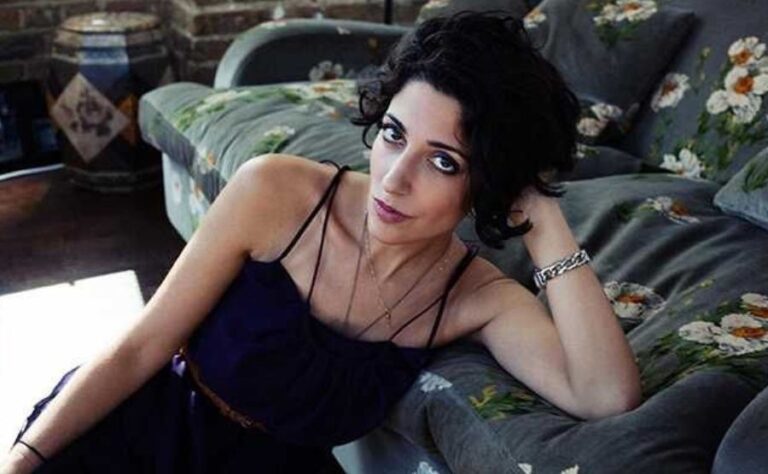
In 2026, Mona Vaynerchuk sits at an unusual crossroads. She is the wife of one of the internet’s most famous entrepreneurs. She is also, in her own right, a Doctor of Pharmacy who abandoned a clinical career to build a science-backed wellness brand long before that became a fashionable career path.
Her story is not about fame by association. It is about a woman who spent six years earning an advanced degree, walked into her dream job, and knew within weeks that it was wrong. What she did next — the stumbles, the reinvention, the burnout, the comeback — is the more interesting story.
See also “Is DeBraca Denise Still Alive? The Full Story of Redd Foxx’s Adopted Daughter“
The Immigrant Blueprint
Mona Vand was born on March 10, 1985, in Los Angeles, California. She grew up knowing exactly where her family came from. Her parents fled Iran following the revolution, arriving in the United States carrying ambition and a survival instinct that immigrants tend to carry for the rest of their lives.
Her mother, Mojgan Afsahi, built a career in science — eventually becoming a microbiologist and Senior Clinical Analyst, a path that began with a Master of Science from the College of Saint Rose in Albany and continued at Rensselaer Polytechnic Institute, where she earned a biomedical engineering degree in 1988. That trajectory mattered. In the Vand household, the message was unmistakable: education is the foundation, and professional achievement is the reward.
Mona later described the cultural pressure with dry humor — laughing about the “doctor, lawyer, engineer” expectation common to Iranian immigrant families. The joke has teeth, though. That pressure shaped her early life completely.
Her brother Nema Vand, who would later gain visibility on Bravo’s Shahs of Sunset, grew up with a different path. Reportedly, Nema and Mona experienced a period of estrangement before reconnecting as adults — a detail that adds texture to a family story that was never entirely smooth despite its outward success.
Mona and Nema were deliberately raised without deep immersion in Iranian culture. Their parents, having experienced firsthand the discrimination Iranian immigrants faced during the 1980s in America, made a conscious choice to shelter their children from a cultural identity that could invite hostility. That erasure had its own consequences — a disconnection from heritage that Mona would later work to rebuild, including expressing a desire to relearn Farsi as an adult.
Six Years of Study, Weeks of Doubt
Mona enrolled at the Massachusetts College of Pharmacy and Health Sciences in Boston. It was the degree her upbringing pointed toward. She earned her Doctor of Pharmacy in 2009 — six years of rigorous science, pharmacology, clinical rotations, and professional credentialing.
She returned to Los Angeles. She got a job in clinical pharmacy. Within a matter of weeks, she understood that something was deeply wrong — not with the profession, but with her fit inside it.
The pharmacy counter, the prescription cycles, the reactive model of healthcare — none of it matched her actual belief system. Mona had come to believe that food, prevention, and holistic choices were the first line of defense. Medication, in her framework, was a last resort. The clinical model operated in almost exactly the opposite direction.
She left. Then, because entrepreneurship is expensive and unpredictable, she returned. She spent a period of her career working pharmacy shifts while building a side business in her remaining hours — a dual life that wore on her steadily. She has spoken openly about the disappointment she felt each time she had to walk back through those pharmacy doors. Eventually, she built enough traction to leave permanently.
The sequence matters. Mona did not walk away in a blaze of inspiration. She crawled out, carefully, over months and years, funding her exit with the very career she wanted to escape.
Building the Brand on a Pharmacist’s Logic
In 2015, Mona launched two things simultaneously: a blog and a YouTube channel called The Modern Pharmacist. The concept was precise. She was not a lifestyle blogger pretending to have scientific credentials. She was a scientist who had concluded that the wellness space needed more honesty, more evidence, and less noise.
The proposition was clear: science-backed wellness, rooted in clean eating and plant-based nutrition, delivered without the mysticism that tends to make health content feel inaccessible or exclusive.
She appeared on NBC. She appeared on The Doctors. She was featured in The Telegraph. Slowly, the audience grew — not explosively, but steadily, earned through genuine expertise and a camera presence that felt more like a smart friend than a brand spokesperson.
A professional branding partnership around this period helped formalize her visual identity. When she approached designers, she already had over 100,000 Instagram followers accumulated entirely outside working hours, while still holding down a pharmacist’s schedule. The creative brief was built around a morning-in-the-life format — exercise, smoothie-making, everyday intimacy — because that specificity was what separated her from generic wellness accounts.
She founded “The Modern Pharmacist” as a formal movement, not just a channel name. The idea was to bridge the pharmaceutical and holistic spaces, positioning evidence-based thinking and natural prevention as compatible rather than opposed.
Reality Television and the Panic Attack
Mona’s brother Nema joined Bravo’s Shahs of Sunset in its seventh season. The show, built around affluent Persian-Americans in Los Angeles, introduced a version of Iranian-American life to mainstream television audiences. Mona appeared alongside Nema.
She has since described the experience of filming that first scene as provoking a full panic attack. The lights, the cameras, the performance of family on demand — none of it aligned naturally with someone whose instinct was always toward the measured and the private.
Her time on the show was limited. Reality television is a specific kind of exposure, one that rewards drama and conflict above all else. Mona’s brand depended on something different — trust, credibility, and calm authority. The two did not coexist easily. She stepped back from that world and returned to building her own platforms on her own terms.
The episode with Nema on the Core Self podcast, recorded years later, revealed the nuance that television had flattened. The siblings talked about what it was actually like to be cast together, the behind-the-scenes pressure, and the experience of growing up on different coasts — Mona in Los Angeles, Nema splitting his time elsewhere — before finding their way back to each other.
The Burnout Years
Building a personal brand across multiple platforms simultaneously is a specific kind of labor that rarely looks like labor from the outside. By the period before 2022, Mona was maintaining YouTube, Instagram, TikTok, a blog, and multiple podcasts — all requiring different content styles, production values, and creative energy.
She has spoken candidly about perfectionism nearly breaking her. When everything you publish is attached to your professional credential and your face, the stakes of every post feel elevated. The result is a grinding internal pressure that has no obvious end point.
She stepped away from social media for a full year. It was not an announced hiatus with a comeback date. According to her own account, she did not entirely mean for it to last that long. The COVID-19 pandemic accelerated a reprioritization of her life — sleep became a non-negotiable pillar of her wellness philosophy in a way it had not been before.
During this period, she also removed “Dr.” from her public-facing identity. It was a conscious choice. The credential was real and earned. But leading with it, she seemed to decide, was setting up a specific expectation — clinical authority — that was no longer entirely what she was offering. She was offering something more personal, more experiential. The title felt like a wall between her and her audience.
She came back. Her audience came back too. Her Mona-Vated podcast launched as a long-form space for conversations about nutrition, mindfulness, spirituality, and self-discovery. In January 2023, she co-launched Core Self with Chloe Flower — pianist, activist, fashionista — a podcast that deliberately tackled uncomfortable subjects: plastic surgery, immigrant identity, personal relationships, online hate. The premise was radical authenticity, which in the wellness content space is rarer than it sounds.
Mona’s Clean Dinners added a third strand — food, hosting culture, and plant-based cooking as a way of life rather than a trend.
The Science Behind the Lifestyle
What separates Mona Vaynerchuk from the crowded field of wellness influencers is not simply her pharmacy degree. Plenty of wellness personalities have credentials. The difference is in how she uses hers.
She approaches nutrition and holistic health from a clinical foundation, which means she tends to emphasize mechanism — why a practice works, not merely that it does. Her early YouTube content was built on this distinction, explaining the pharmacology of ingredients, distinguishing between supplement marketing claims and evidence, and flagging the gaps between what traditional medicine offers and what preventive holistic practices can add.
Her plant-based philosophy has been consistent since at least 2015 and predates the mainstream explosion of plant-based content. She has explored ancestral Iranian wellness traditions — saffron, rosewater, turmeric — connecting them to her heritage in a way that also reconnects her to the Iranian identity her childhood partially set aside.
She is not anti-medicine. Her PharmD is not a costume. But her public position — food as first choice, medicine as last resort — put her at odds with the clinical culture she trained inside, and that tension has been the engine of her brand since the beginning.
The Relationship That Changed Two Brands
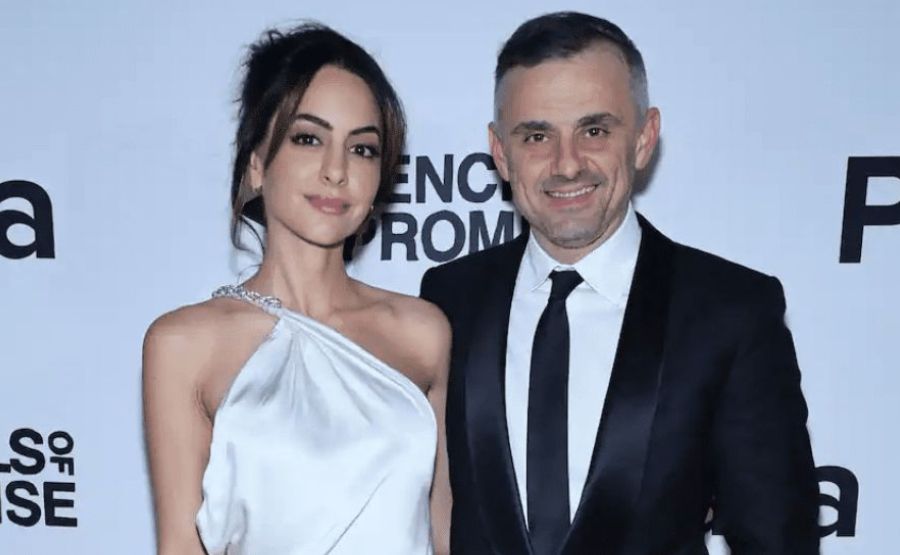
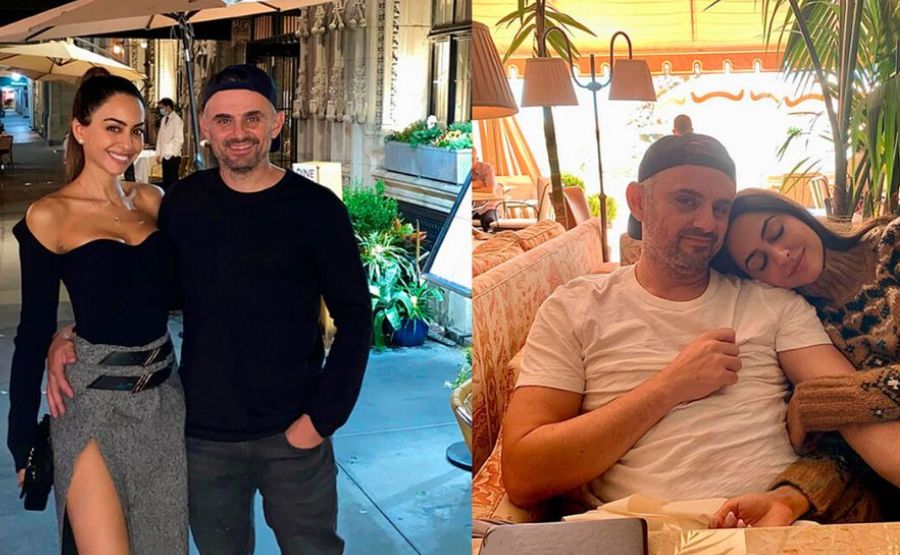
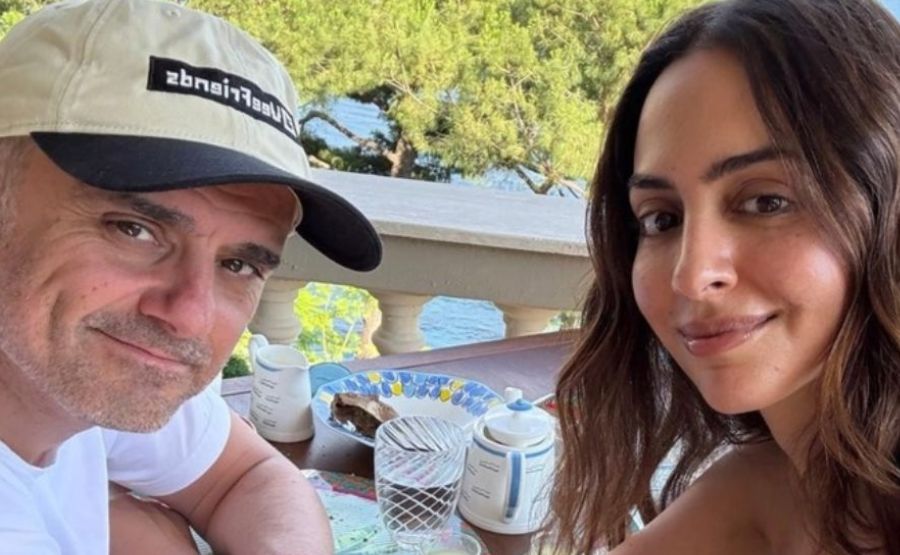
On February 21, 2022, Gary Vaynerchuk posted a photograph with Mona Vand on Instagram. The caption expressed deep happiness. She responded in kind. The internet noticed immediately.
Gary Vaynerchuk — known globally as Gary Vee — had built his reputation as the loudest voice in hustle culture: VaynerMedia, #AskGaryVee, the relentless preaching of volume and grinding output. His marriage to his first wife Lizzie Vaynerchuk had been largely private during its duration. Their divorce was finalized quietly around 2022–2023. Two children — Misha and Xander — came from that marriage.
The pairing of Gary Vee and Mona Vand prompted real public speculation. Not just about the relationship itself, but about what it meant for Gary’s personal philosophy. Here was the king of no-sleep hustle visibly aligned with someone whose entire brand argued for sleep, stillness, and regenerative living.
Those who watched closely noticed something shift. By 2024 and into 2025, Gary was talking openly about longevity, nutrition, and the importance of physical health in ways that were genuinely new for him. Whether Mona’s influence was the cause or whether Gary was already evolving, only they could say. But the timing was not subtle.
There was also an interesting secondary connection: Nema Vand, Mona’s brother, had professional ties to Gary Vaynerchuk’s companies before Mona and Gary went public as a couple. Whether those connections were the introduction point has never been confirmed.
The Wedding: June 14, 2025
On June 14, 2025, Mona Vand and Gary Vaynerchuk tied the knot. The ceremony was small, intimate, attended by close family and friends. No major media outlet covered it in real time.
Five weeks after the wedding, on July 19, 2025, Gary shared pictures on Instagram with the straightforward message, “Mr. & Mrs. Vaynerchuk 6•14•25.” That was the announcement. No press release, no magazine cover, no PR strategy. The deliberate quietness of it was a statement in itself.
Mona adopted the surname Vaynerchuk publicly. Her Instagram account, previously @monavand, transitioned to @monavaynerchuk. By 2026, she has around 495,000 Instagram followers under the new handle and continues running her wellness platforms with roughly the same tone and focus as before.
She has not become Gary Vee’s content accessory. That distinction is important. In interviews and in her own output, her voice has remained her own — science-first, calm, personally grounded in her Iranian heritage and plant-based philosophy.
The Complexity That Gets Missed
Most coverage of Mona Vaynerchuk falls into one of two categories. Either she is Gary Vee’s wellness wife, defined primarily by the relationship. Or she is a PharmD turned wellness queen, a clean origin story with a triumphant arc.
Neither picture is complete.
The real story includes a year of disappearance from the platforms she spent a decade building. It includes a failed early business partnership that she has publicly acknowledged cost her significantly. It includes the specific grief of earning a terminal degree, working in the profession it qualifies you for, and realizing almost immediately that you made the wrong choice.
It includes growing up deliberately disconnected from an Iranian identity, then spending adulthood trying to reconnect with it. It includes the complicated dynamic of a brother who found fame on reality television — a medium she tried and found damaging to her own mental stability.
Publicly she projects calm certainty. Privately, by her own account, perfectionism and burnout have been constant adversaries.
That is the person behind the brand. Both things are true.
What She Has Actually Built
By 2026, Mona Vaynerchuk’s digital footprint is significant by any honest measure. Her TikTok account carries over 14.1 million likes. Her Instagram following has grown steadily across multiple platform transitions. Three active podcast properties span different angles of the same core philosophy. Her Modern Pharmacist movement predates the mainstream credibility of science-backed wellness content by several years.
She appeared on national television (The Doctors, NBC programming) before social media could have carried her there alone. She built an audience on YouTube before the platform’s algorithm rewarded wellness content at scale. She built a personal brand large enough to leave a stable, well-paying clinical career for — and did not fail.
The investment in her own brand before quitting pharmacy was methodical, not impulsive. The retreat and return after burnout showed self-awareness, not weakness. The removal of “Dr.” from her title showed someone more interested in genuine connection than credentialed authority.
None of this makes her uniquely extraordinary in a world of large-scale content creators. What makes it noteworthy is the specific tension she has always inhabited — between rigorous science and holistic living, between inherited identity and chosen self, between the family she came from and the one she has made.
Influence on Holistic Wellness Culture
Mona launched The Modern Pharmacist in 2015, at a time when the wellness content space was dominated either by fitness influencers with no clinical background or by doctors speaking in clinical language that kept audiences at arm’s length.
She occupied a genuinely distinct position. Her PharmD gave her credibility. Her rejection of clinical pharmacy in favor of preventive health gave her a philosophy. Her Iranian heritage gave her a specific set of ancestral wellness traditions — saffron, rosewater, turmeric, rituals passed through her grandmother’s hands — that she eventually integrated into her public-facing work.
The result was content that could navigate between a supplement ingredient list and a family recipe. That specificity is what built trust at scale.
She has not published a book. She has not launched a product line with her name attached, at least not publicly. The brand has stayed largely in the content and conversation space — podcasts, video, blog posts. That is either a strategic choice or an opportunity not yet taken. Either way, the foundation she has built since 2015 is a real one.
FAQs
1. What is Mona Vaynerchuk’s real name?
She was born Mona Vand. After marrying Gary Vaynerchuk on June 14, 2025, she adopted the surname Vaynerchuk. Both names refer to the same person.
2. Where was Mona Vaynerchuk born and raised?
She grew up in Los Angeles, California, where she was born.Her parents were Iranian immigrants who came to the United States after the Iranian Revolution.
3. What degree does Mona Vaynerchuk hold?
She holds a Doctor of Pharmacy (PharmD) from the Massachusetts College of Pharmacy and Health Sciences in Boston, which she completed in 2009.
4. Did Mona Vaynerchuk actually work as a pharmacist?
Yes, briefly. After graduating, she worked in clinical compounding pharmacy in Los Angeles. She recognized almost immediately that the reactive, medication-first model of clinical care did not align with her actual beliefs. She left — returned for a period to fund her entrepreneurial work — then left the profession permanently.
5. What does “The Modern Pharmacist” mean?
It is the brand movement Mona founded, starting around 2014–2015, to bridge pharmaceutical science with holistic health. The central argument: food and prevention first, medication as a last resort. It became the intellectual framework for her blog, YouTube channel, and later content work.
6. Why did Mona drop the “Dr.” title from her social media?
She addressed this publicly. In her own account, the credential began to create a gap between her and her audience — setting expectations of clinical authority that no longer fully described what she was offering. Removing it was a deliberate move toward a more personal and experiential connection with her followers.
7. Who is Nema Vand?
Nema Vand is Mona’s brother. He is a digital marketing consultant, branding executive, and reality TV personality known for his appearance on Bravo’s Shahs of Sunset from its seventh season onward. He and Mona have spoken publicly about a period of estrangement before reconnecting.
8. What podcasts does Mona Vaynerchuk host?
She hosts Mona-Vated (a long-form wellness and lifestyle show), Mona’s Clean Dinners (focused on food and plant-based hosting), and previously co-hosted Core Self with pianist and activist Chloe Flower, which launched in January 2023.
9. When did Mona and Gary Vaynerchuk go public?
On February 21, 2022, Gary posted a photo with Mona on Instagram, explicitly expressing that she made him deeply happy. This was their first public appearance together.
10. When did they get married, and how was it announced?
They married on June 14, 2025, in a small, private ceremony. The public announcement came five weeks later, on July 19, 2025, when Gary posted wedding photographs on Instagram with the caption: “Mr. & Mrs. Vaynerchuk 6•14•25.”
11. Does Mona have children with Gary Vaynerchuk?
As of 2026, Mona and Gary have not publicly announced having children together. Gary has two children — Misha and Xander — from his previous marriage to Lizzie Vaynerchuk.
12. Has Mona Vaynerchuk appeared on television?
Yes. She appeared on Bravo’s Shahs of Sunset alongside her brother Nema. She has also appeared on NBC programming and The Doctors. She has described the reality TV experience as anxiety-inducing, including a panic attack during filming.
13. What is Mona’s position on plant-based living?
She has been publicly committed to a plant-based philosophy since at least 2015. For her, it is not a trend but a core operating principle — connected both to her scientific understanding of nutrition and to her holistic worldview.
14. How did Mona Vaynerchuk handle burnout?
She has spoken honestly about perfectionism and the weight of maintaining multiple content platforms simultaneously. She stepped away from social media for approximately a year before returning with what she described as clearer personal boundaries. The COVID-19 pandemic contributed to a reprioritization that included making sleep a non-negotiable foundation.
15. What is Mona Vaynerchuk’s heritage and how does it influence her work?
She is the daughter of Iranian immigrants. Though she was raised with limited connection to Iranian culture (a protective choice made by her parents during the anti-Iranian sentiment of the 1980s), she has as an adult expressed a desire to reconnect with that heritage — including relearning Farsi and incorporating ancestral wellness traditions like saffron, rosewater, and turmeric into her content philosophy.
Read, learn, and get inspired with every visit to Brief Magazine.