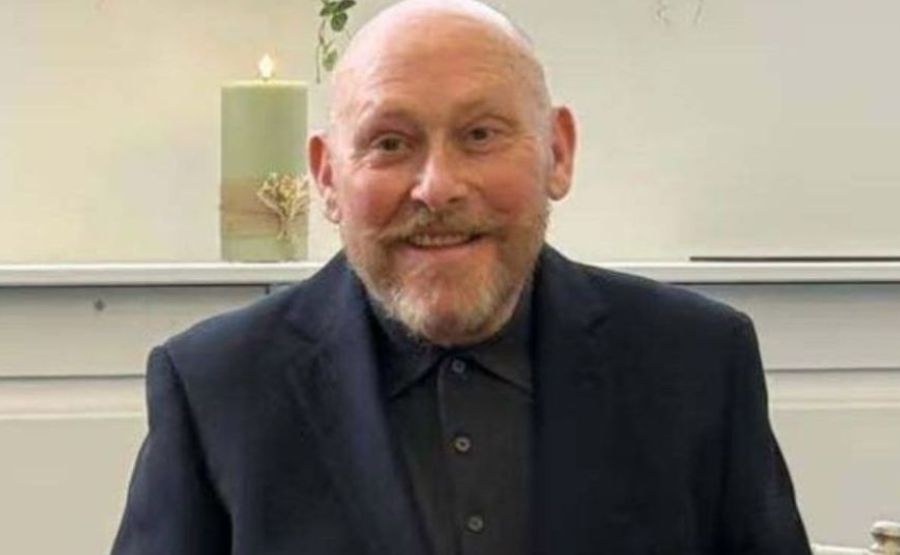
Peter Spanton: The Man Who Built an Empire from a Bar Stool and a Bottle
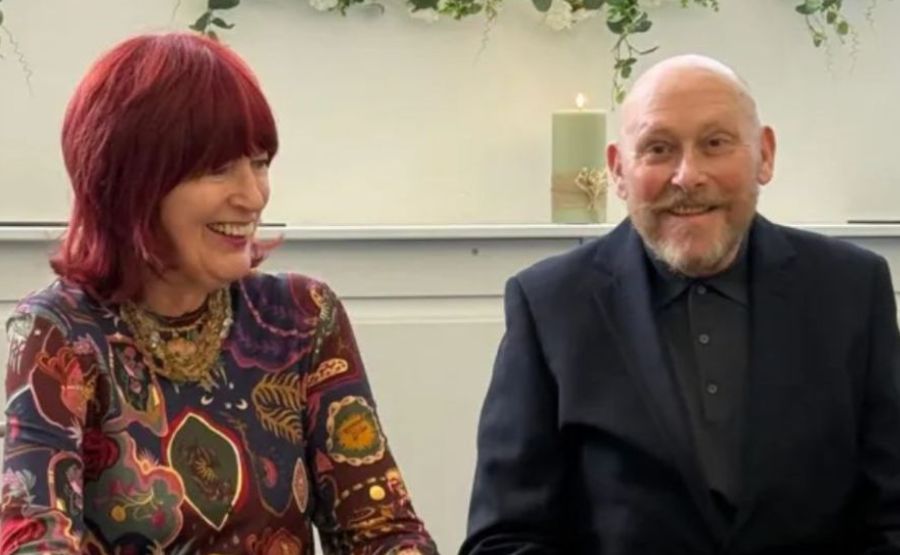
Peter Spanton matters in 2026 not because of fame, but despite the absence of it. In a ten-minute registry office ceremony on January 31, 2026, he married Janet Street-Porter, one of the most well-known media figures in Britain, for the fifth time. Yarmouth, Norfolk, with six guests, no press, and a dog named Badger. The announcement reached the public only days later, through a home video played on ITV’s Loose Women. That quiet, deliberate choice tells you almost everything about who Peter Spanton is.
Quick Bio
| Detail | Information |
| Full Name | Peter Charles Spanton |
| Date of Birth | January 1955 |
| Age (2026) | 71 years old |
| Nationality | British |
| Birthplace | London, England |
| Occupation | Entrepreneur, Drink Designer, Former Restaurateur |
| Known For | Vic Naylor’s bar, Peter Spanton Drinks brand |
| Married | Janet Street-Porter (31 January 2026) |
| Partner Since | 1999 |
| Wedding Venue | Registry Office, Great Yarmouth, Norfolk |
| Companies | Peter Spanton Ltd (2008–2018), Peter Spanton Drinks Ltd (2014–2022) |
| Listed Occupation (Companies House) | Drink Designer |
Who Is Peter Spanton, Really?
He is not, as many internet searches still confusingly suggest, the karate master born in 1943 in Bow, East London — that was a separate man entirely, a pioneer of British Wado-ryu karate who died in November 2020. The two share a name and nothing else. The confusion has muddied countless online profiles, and it is worth clearing up before going any further.
This article’s Peter Spanton was born in January of 1955.UK Companies House records — the most reliable documentary anchor available — confirms this date. He built his career not in dojos but in some of London’s most culturally charged rooms: first as a cocktail mixer in two iconic 1980s clubs, then as the owner of a Clerkenwell bar that ended up in a Guy Ritchie film, and finally as the creator of a premium drinks brand that changed the way the industry thought about non-alcoholic mixers.
He is, above all, a man who has reinvented himself three times — and made each reinvention count.
See also “Kev Corbishley: The Man Whose Name on a Screen Stopped a Nation“
Early Years and the London That Shaped Him
Very little is publicly documented about Spanton’s childhood. He does not appear to have offered biographical accounts of his upbringing in interviews, and the people around him — including Janet Street-Porter — have largely respected that wall of privacy.
What is established is that he came of age in London in the 1960s and 1970s. The city during those decades was undergoing seismic shifts: post-war austerity giving way to cultural rebellion, the rise of youth counterculture, and the slow transformation of areas like Clerkenwell from industrial backstreets into creative hubs. Spanton absorbed all of this.
His formative professional chapter began not behind a restaurant pass but behind a bar. According to The Caterer, the leading UK hospitality trade publication, he worked as a cocktail mixer at two of London’s most culturally significant venues of the early 1980s: Blitz and The Fridge. Blitz, based in Covent Garden, was the beating heart of the New Romantic movement — the club where Boy George, Spandau Ballet, and a generation of creatives went to see and be seen. The Fridge was Brixton’s legendary nightclub, which ran from 1981 to 2010 and anchored south London’s music scene for three decades. These were not ordinary bar jobs. They were front-row seats to British pop culture at one of its most electric moments.
Vic Naylor’s: Building a Clerkenwell Institution
In June 1986, Spanton made a move that would define the next two decades of his life. He opened Vic Naylor’s, a bar and restaurant at 38–42 St John Street in Clerkenwell, directly across from Smithfield meat market. He ran it until 2005 — nearly twenty years of nightly service in one of central London’s most competitive postcodes.
Barbican Life later described Vic Naylor’s as “supposedly the start of the Clerkenwell bar/restaurant scene.” That is not hyperbole. At the time, Clerkenwell was not yet the design-district destination it would become. Spanton helped make it one.
The venue drew a clientele that was, by all accounts, brilliantly mixed. Artists, journalists, musicians, filmmakers, and figures from what Spanton himself once called London’s “demimonde” — those on the creative fringes of respectability — passed through its doors. It was an atmosphere Spanton engineered deliberately, and it worked.
The bar’s cultural footprint even reached the cinema. Vic Naylor’s was used as the location for JD’s bar in Guy Ritchie’s Lock, Stock and Two Smoking Barrels (1998) — the character played by Sting. The venue appeared on screen exactly as it looked in daily life, which says something both about the aesthetic Spanton had created and about the circles in which he moved.
Publicly, he was the ringmaster of a beloved London gathering place. In private, the lifestyle carried costs. Spanton later admitted to The Independent that during those years he was “a serious drinker.” The bar and restaurant world demands that. Living on a Thames houseboat in Chelsea while running a high-energy Clerkenwell venue through the 1990s was not a recipe for moderation.
The Decision That Changed Everything
Around 2005, Spanton stepped back from Vic Naylor’s. The venue continued under different management and was sold around 2010. What happened next was the pivot that would eventually define him more than the bar ever did.
He stopped drinking entirely.
This was not a quiet lifestyle tweak. It was a complete break from the world he had inhabited for three decades. And it immediately presented a practical problem: there was almost nothing worth drinking instead. Spanton bought every non-alcoholic product he could find on the UK market, laid them out on a table, and sorted them into categories. By his own account, only two met the standard he expected as an adult with a trained palate.
He started making his own.
That moment of personal frustration became the founding logic of Peter Spanton Drinks. The brand launched commercially around 2012, built on a straightforward premise: non-alcoholic mixers and soft drinks could — and should — be as sophisticated as premium spirits. They did not need to be sweet. They did not need to compensate. They needed to be genuinely, unapologetically excellent.
Peter Spanton Drinks: The Brand, the Products, the Philosophy
The range he developed was built on botanicals, natural ingredients, and unconventional flavor pairings. Each drink was numbered rather than named, and the numbering was deliberately non-sequential. Spanton told I Love Gin that he wanted people “to be intrigued, to ask why.” The gaps in the sequence — numbers not yet released — were reserved for future recipes he considered worthy of the brand.
The product line grew to include:
- No. 3 — A dry ginger ale inspired by 1950s East London, dedicated “In memory of Notcher Spanton 1928 to 2012” — his father
- No. 4 — Mint and dark chocolate tonic, designed for rum and amaretto
- No. 5 — Lemongrass and ginger tonic
- No. 7 — 55% Açaí berry with spices in natural spring water, no added sugar
- No. 9 — Cardamom tonic, the brand’s most celebrated product
- No. 13 — Salted Paloma Grapefruit Soda
- No. 16 — A reimagined cream soda, with vanilla and butter notes
The drinks were also notable for a technical distinction: they were the first beverages in the UK to be carbonated using carbon-neutral volcanic CO₂ sourced from the ground.
The early response was remarkable. Before the brand had even officially launched, novelist and journalist Will Self wrote a piece praising the No. 7 Açaí drink. The website Spanton had set up to distribute free samples crashed under the weight of demand. He told The Independent: “By that evening, I had 3,000 e-mails from everyone from recovering alcoholics to pregnant women, people in Muslim communities to people with medical difficulties.” The audience — adults who wanted something real to drink — was larger and more desperate than even he had anticipated.
High-profile early adopters followed. Damon Albarn and Paul Simonon of The Clash and Gorillaz reportedly took the No. 7 on tour. Chef Mark Hix stocked the range across his restaurants. Fergus Henderson served them at St John, his Michelin-recognized restaurant back in Clerkenwell — the neighborhood where Spanton had first made his name. The brand won Gold, Silver, and Bronze medals at the SIP Awards, Great Taste Awards, and Class Bar Awards in 2017 and 2018.
The brand’s packaging was intentionally restrained: minimalist design, no loud marketing, no mass-market distribution push. Spanton understood that a product positioned as sophisticated needed to look the part and let word-of-mouth do the work.
The Companies, the Dissolution, and What Remains
Here is where Spanton’s story becomes more complicated, and where honest reporting matters.
Companies House records show that two companies bore his name. Peter Spanton Limited was incorporated in May 2008 and dissolved in May 2018. Peter Spanton Drinks Ltd was incorporated in July 2014, entered creditors’ voluntary liquidation in June 2020, and was formally dissolved in July 2022.
Creditors’ voluntary liquidation means the company could not meet its debts. It is a formal legal process, not a quiet winding-down. This happened during the COVID-19 pandemic, which devastated the hospitality and boutique drinks sectors globally. Context matters. But the dissolution is a documented fact, and any honest account of Spanton’s career includes it.
What complicates the narrative further is that the brand continues to operate. Products remain listed on Amazon UK and Ocado. The website peterspanton.com remains live. His Instagram account (@peterspanton_) shows over 1,500 posts as of 2026. Whether the brand operates under a different corporate structure or informally is not publicly documented. Spanton has not addressed this gap publicly.
The Relationship With Janet Street-Porter
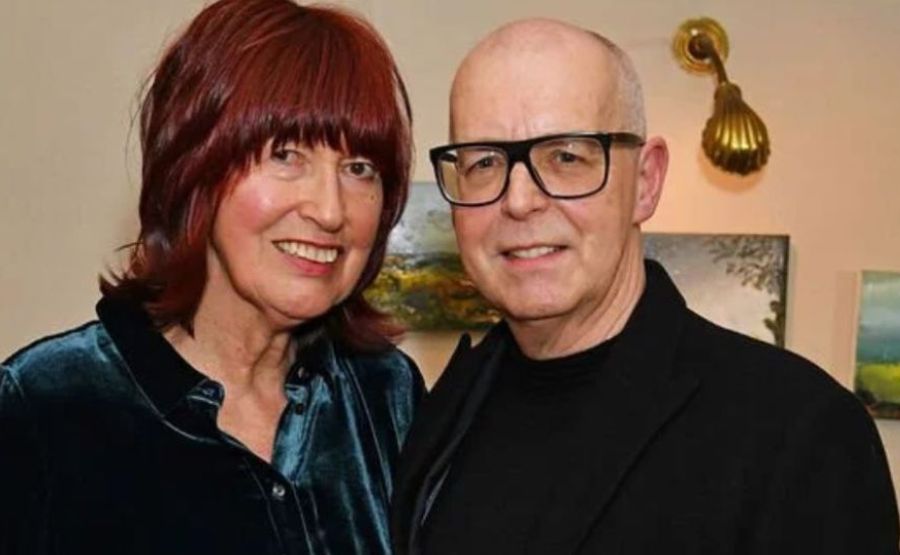
Peter Spanton met Janet Street-Porter in 1999. He was 44. She was 52, already one of Britain’s most recognizable media figures — the editor of The Independent on Sunday, a former BBC Television executive, a journalist whose voice had shaped British broadcasting for thirty years. Their relationship began quietly and stayed that way.
For twenty-six years, they lived together, worked separately, and kept their private life almost entirely private. Street-Porter went on television regularly; Spanton did not. She gave interviews; he declined them. In a 2025 conversation with The Guardian, Street-Porter described the relationship plainly: “It’s survived. I’m not bored.”
That same year, the two talked it through over Christmas and decided to marry. Spanton had never been married before. Street-Porter had been married four times — to photographer Tim Street-Porter, Time Out editor Tony Elliott, Canadian filmmaker Frank Cvitanovich, and salesman David Sorkin, whose Las Vegas wedding she later described as “a really bad mistake.”
The ceremony took place on 31 January 2026, at a registry office in Great Yarmouth, Norfolk. The room had chairs for 100 guests. The couple, two former neighbours serving as witnesses, two close friends, and Badger the dog made the six individuals in attendance.Janet wore a bright printed dress. Peter wore a black suit. The ceremony lasted approximately ten minutes.
Janet announced the news on Loose Women two days later, through a pre-recorded video message. She told viewers: “Peter and me, and Badger, got married on SaturdayI did it at last, so there you have it. Waited ’til the last for the best.”
What she said about Peter in the days that followed was telling. She admitted to being “a complete state” the night before, not out of doubt, but out of care. She stated, “I didn’t want to make fun of Peter.” “I wanted it to be lovely for him, because he hasn’t been married before.”
That single line carries more weight than most wedding announcements. After 26 years together, what worried her was not herself — it was him.
What Defines Peter Spanton’s Legacy
Spanton’s career arc — nightclub bartender, restaurateur, drinks innovator — looks, in retrospect, almost too tidy. Logically, each chapter builds upon the previous one. The cocktail skills of his Blitz years informed the flavor instincts behind Vic Naylor’s. The Clerkenwell years built the industry knowledge and relationships that made Peter Spanton Drinks credible before it had proven a single thing.
His impact on the premium mixer category is real. Before brands like his began appearing in the early 2010s, the choice for a non-drinking adult at a high-end bar was essentially: diet cola, orange juice, or sparkling water. Spanton argued, in product rather than words, that this was unacceptable. The industry has since moved substantially in the direction he pointed.
He is also, in some ways, a difficult figure to assess fully. His companies are dissolved. His net worth is undisclosed and genuinely unknown — no verified figure exists. He has given very few interviews. Much of what is written about him is secondary, filtered through coverage of Janet Street-Porter, or padded with speculation dressed as fact. Several websites confuse him with the karate master and repeat the errors as truth.
What remains verifiable: a man born in January 1955 who spent twenty years building one of London’s most atmospheric bars, turned his own sobriety into a business philosophy, created products that earned serious industry recognition, and married, for the first time at 71, in a room built for 100 people, with six guests and a dog, on a Saturday morning in January.
FAQs
1. Who is Peter Spanton?
Peter Spanton is a British entrepreneur born in January 1955. He owned and ran Vic Naylor’s bar and restaurant in Clerkenwell from 1986 to 2005, then founded Peter Spanton Drinks, a premium non-alcoholic mixer brand. He married broadcaster Janet Street-Porter in January 2026.
2. How old is Peter Spanton?
He turned 71 in January 2026, based on the birth date recorded in UK Companies House filings.
3. Is Peter Spanton the same as the karate master?
No. There was a separate Peter Spanton — a pioneer of British Wado-ryu karate, born in 1943 in Bow, East London — who died in November 2020. Many websites confuse the two. They are entirely different individuals.
4. When did Peter Spanton marry Janet Street-Porter?
On 31 January 2026, at a registry office in Great Yarmouth, Norfolk. The ceremony lasted approximately ten minutes. Street-Porter announced the marriage on Loose Women two days later.
5. Was this Peter Spanton’s first marriage?
Yes. He had never been married before. It was Janet Street-Porter’s fifth marriage.
6. What was Vic Naylor’s?
Vic Naylor’s was a bar and restaurant at 38–42 St John Street in Clerkenwell, London. Spanton ran it from 1986 to 2005. It was later used as a filming location for Guy Ritchie’s Lock, Stock and Two Smoking Barrels (1998).
7. What is Peter Spanton Drinks?
It is a premium non-alcoholic mixer and tonic brand Spanton founded, launching commercially around 2012. The drinks are numbered rather than named, and are carbonated with volcanic CO₂. Products include cardamom tonic, lemongrass tonic, açaí soda, cream soda, and others.
8. Are Peter Spanton Drinks products still available?
As of 2026, products appear on Amazon UK and Ocado, and the peterspanton.com website is live. However, both of Spanton’s registered companies — Peter Spanton Ltd and Peter Spanton Drinks Ltd — have been formally dissolved.
9. What is Peter Spanton’s net worth?
No verified figure exists. All numbers published online are speculative. His businesses were privately held, and he has never disclosed personal financial details.
10. Did Peter Spanton work at the Blitz club?
Yes. According to The Caterer, he worked as a cocktail mixer at both Blitz in Covent Garden and The Fridge in Brixton — two of London’s most culturally significant venues of the early 1980s.
11. Why did Peter Spanton stop drinking?
He has not given a single definitive public explanation. He stepped away from Vic Naylor’s around 2005 and subsequently stopped drinking entirely. He has spoken in interviews about finding that almost no adult soft drinks met an acceptable standard — which motivated him to create his own brand.
12. How long were Peter Spanton and Janet Street-Porter together before marrying?
They began their relationship in 1999 and married in January 2026 — 27 years together before formalizing the union.
Read, learn, and get inspired with every visit to Brief Magazine.